
The common mistake with pests in a holiday let is treating a guest's report as a cleaning job: wipe up the droppings, apologise, and hope the next guests don't notice. Pests return unless you find how they got in and what drew them there, and a guest who meets the same problem twice stops trusting the property. What follows covers the checks that keep pests out between stays, the first hour after a report, when guests are better off somewhere else, and where the law and the booking platform come in.
A holiday let gives pests more chances than a family home does. It sits empty for days or weeks, then fills with people who don't know which door sticks, leave food out or bring luggage from somewhere else. The routine that protects it has two halves: prevention you build into changeovers and quiet weeks, and a calm, practised response for the day a guest sends a photo of something on the kitchen floor.
Why pests come back after a clean
A clean removes the evidence, not the cause. Mice that found a gap behind the boiler pipework will use it again the following night, and droppings that have been wiped away leave you with no way of telling whether the problem has stopped. The same is true of ants following a trail to a sticky cupboard shelf, or flies hatching from a bin that wasn't emptied before an empty week.
Every pest problem has three parts worth separating: the way in, the thing that attracted it, and the place it is living or feeding now. Cleaning deals only with the third. If you don't close the way in and remove the attraction, you are paying for the same clean, and the same apology, again and again.
That is why the response to a report and the prevention routine belong together. What you find during a report tells you where to look during prevention, and a record of past reports shows which corners of the property keep drawing problems.
Common pests and the signs they leave
Most reports in a UK holiday let involve a short list of pests. Each leaves different signs, and knowing them helps you decide how fast to act before anyone visits.
| Pest | Signs to look for | Where to check | First step |
|---|---|---|---|
| Mice | Small dark droppings, gnawed packaging, scratching at night | Behind kitchen units, under the sink, around pipework | Clear food, close gaps, call a pest controller if signs continue |
| Rats | Larger droppings, gnaw marks on wood, burrows outside | Bin areas, sheds, drains and gaps at ground level | Call a pest controller or your council promptly |
| Bed bugs | Small dark spots and shed skins along mattress seams | Mattress edges, headboards, bed frames and nearby furniture | Stop using the room and call a pest controller |
| Ants | A trail of ants to food or sugary spills | Worktops, cupboards, skirting and window sills | Clean the trail, store food sealed, find the entry point |
| Wasps | Repeated wasps around one spot outside | Eaves, roof edges, sheds and wall cavities | Keep guests away from the spot and call a pest controller |
| Flies | Many flies indoors, often near windows | Bins, drains, lofts and window frames | Empty bins, clear drains, check the loft |
Use the table as a starting point. If you are unsure what you are looking at, a clear photo sent to a pest controller usually settles it faster than a description.
How pests get into a property
Mice and rats come in through gaps at ground level and around pipes and cables, and they move in when the weather turns cold. An empty property in autumn, with no noise and no one to notice, gives them weeks to settle before the next guests arrive. Gaps under external doors, broken air bricks, holes where an old pipe was removed and unsealed spaces behind kitchen units are the usual routes.
Insects follow food and shelter. Ants come for crumbs and spills left in cupboards or under the toaster. Flies breed in bins and drains that sit unemptied. Wasps build in eaves, sheds and roof spaces in spring and summer, and a nest near a door or a terrace soon becomes a guest's problem.
Bed bugs are different, because they don't come in through the structure. They travel in luggage, clothing and secondhand furniture, and they spread between rooms on bedding and bags. A holiday let with a steady stream of guests from many places has more chances of an introduction than a family home, so a property can do everything right and still meet them.
Bins and outside areas tie it together. A bin left full between stays, a compost heap near the back door or bird food spilling onto a patio all bring pests closer to the building.
Prevention checks at each changeover
A few checks at each changeover catch most problems while they are still small. Add them to the routine for whoever does the changeover, so they happen every time rather than when someone remembers. If you are still building that routine, building a changeover checklist from scratch shows how to add property-specific checks to it.
- Look under the sink, behind the bin and along the back of the kitchen units for droppings or gnawed packaging
- Check opened food left by guests and remove it, or move it into sealed containers
- Lift the bed covers and look along the mattress seams and headboard in each bedroom
- Empty every bin, inside and out, and close the lids
- Wipe up spills inside cupboards and under appliances
- Note anything new: a gap, a damp patch, a smell, an insect trail
Keep the checks short. A check that takes two minutes gets done every time; a long inspection gets skipped on a busy day. Anything found goes into the pest record covered further down, with a photo.
Proofing jobs for empty weeks
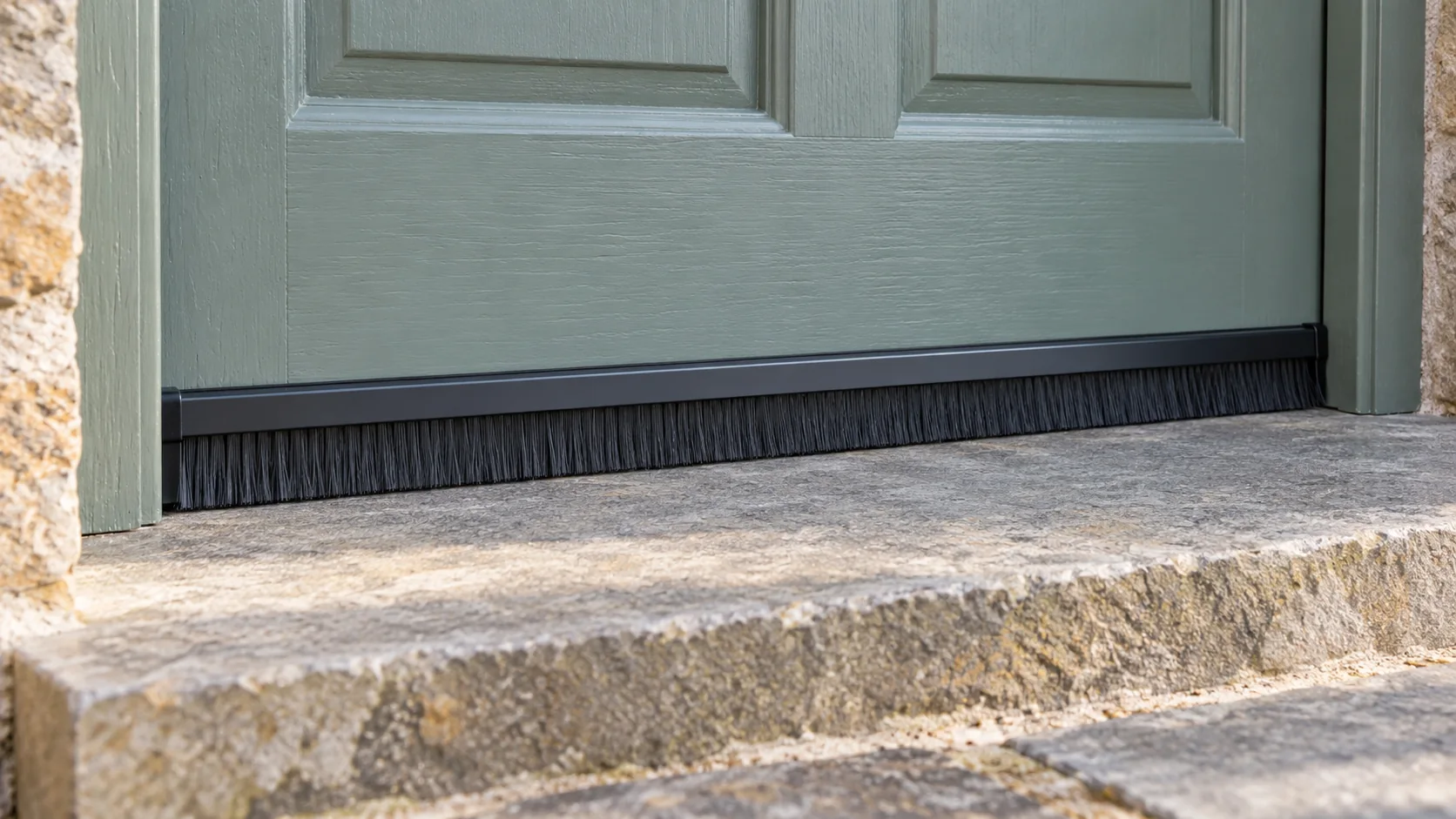
Quiet weeks are when proofing work gets done, because the property is empty and a pest controller or handyperson can get into every corner. Start outside and work in. Walk the outside of the building at ground level and note any gap a pencil would fit through around pipes, cables, vents and the bottoms of doors. Fit brush strips to external doors where daylight shows underneath, and replace broken air bricks or cover them with a fine mesh that keeps airflow.
Inside, look behind the kitchen kickboards and under the sink, where pipes pass through walls and floors. Pack and seal those gaps with a product made for pest proofing, or ask a handyperson to do it. Check the loft for droppings, nesting material or gnawed insulation, and look along the eaves for wasp activity in spring.
Then deal with what draws pests to the building. Move compost bins and log piles away from the walls, cut back plants touching the eaves and windows, and make sure outside bins have lids that close. Clear out any food guests have left in the cupboards before an empty week, and wedge fridge doors open only once the fridge has been emptied and cleaned.
The bigger jobs, such as pulling out kitchen units to clean behind them, fit naturally alongside a deep clean. The holiday let deep clean checklist covers how to plan those longer jobs around bookings.
The first hour after a guest reports pests
When a guest reports pests, the first reply decides how the rest of the stay goes. Reply quickly, thank them for telling you, and say what you are going to do next. Don't argue about whether it can be true, and don't suggest they caused it. Even if a later visit shows the guest brought bed bugs with them, an accusation in the first message makes every later message harder.
Ask for a photo of what they have found and where, and ask whether anyone has been bitten or stung. Tell them in plain words what to avoid in the meantime: not to eat food that may have been touched, to keep away from a wasp nest, or to stop using a bed with signs of bed bugs.
Then give them a time for your next update and keep to it. A guest waiting with no news imagines the worst, and that is when complaints move from the host to the platform. If the report turns into a wider complaint about the stay, handling a holiday let guest complaint without caving or escalating covers how to keep the conversation on what happened and what is fair.
Questions and photos that identify the pest
Before booking anyone, find out what you are dealing with. A photo of droppings beside a coin tells a pest controller whether it is mice or rats. A photo of an insect on a white sheet of paper is far easier to identify than one on a patterned carpet. Ask where the guest found the problem, when they first noticed it, and whether it is in one room or several.
For a report of bites, ask where in the property they think it happened and whether they have seen anything in the bed. Bites alone don't prove bed bugs, but marks on the mattress seams or headboard are worth taking seriously straight away.
Keep the answers in the message thread on the booking platform rather than moving to text or another app. That keeps a record of what was reported and when, which matters if the guest later asks the platform for a refund.
Deciding whether guests stay or move
Some reports are an annoyance the guests can live with for a day. A few ants on a worktop, a single wasp indoors or a fly problem near the bin can usually be handled while guests stay, with a visit from you or a pest controller at a time that suits them.
Others make the property unfit for the rest of the stay. Bed bugs in a bedroom, rats inside the living space, or a wasp nest beside the only door are the usual examples. If the room or the property can't be used safely until treated, say so plainly and help the guests move, whether to another room with no signs, other accommodation, or an early checkout with a refund for the nights lost.
Decide on the move before you talk about money, and decide on money from what the guests lost rather than how upset the message sounded. What to do when a holiday let guest reports a fault mid-stay sets out the same sorting for other faults, and the reasoning carries over to pests.
Council pest control or a private pest controller
Council services vary a great deal. In England and Wales, GOV.UK's find out about pest control service takes your postcode and points you to your council, which may or may not offer treatment. GOV.UK's page on pest control on your property says councils may charge a fee and that you can hire a pest controller instead.
In Northern Ireland, nidirect's pest control services page shows how much councils differ: Belfast City Council offers appointments for rats and mice only, several councils give advice without treatment, and Lisburn and Castlereagh City Council offers a service to privately owned homes. In Scotland, check your own council's website, because services and charges vary there too.
For a holiday let, a private pest controller is often the faster route, because many can visit at short notice and work around bookings. Ask whether they will come back to check the treatment worked, and add a pest controller you have used to your list of trades; finding holiday let maintenance contractors early shows how to check and brief them before you need them.
If you treat a minor problem yourself, follow the rules on the GOV.UK page. Use poison only for the pest named on the packaging, use only traps approved for that species, and keep traps and bait where other animals and children can't reach them. Glue traps designed to catch rodents are among the methods GOV.UK lists as ones you can't use.
When to tell the council about rats or mice
There is a legal duty that surprises many owners. Under section 3 of the Prevention of Damage by Pests Act 1949, the occupier of any land must tell the local authority in writing if they learn that rats or mice are living on or visiting the land in substantial numbers. It applies in England, Wales and Scotland, not to agricultural land, and the Act doesn't extend to Northern Ireland.
On our reading, the host is usually the person this duty falls on, because you control the property between stays. A single mouse seen once is unlikely to count as substantial numbers, but repeated sightings, rats in the building or a problem your pest controller can't clear are worth reporting.
The same Act lets the council serve a notice on the owner or occupier requiring reasonable steps, which can include treatment and structural repairs. Dealing with a problem early, with a pest controller's report on file, puts you in a far better position than waiting until a neighbour or a guest contacts the council first.
Bats, nesting birds and the law
Not every animal in the roof is a pest you are free to remove. GOV.UK's guidance on bats, which applies in England, says all bat species and their resting places are fully protected. It is an offence to disturb a bat in its roost, block access to a roost or damage it, even inside your home. If you think bats are using the loft, the National Bat Helpline gives free advice on behalf of Natural England, including when you are considering pest control. The page links to the separate guidance for Scotland, Wales and Northern Ireland.
That affects pest treatment directly. Natural England's guidance on chemical pest control near bat roosts says you can't use chemical products in or near a known roost while bats are present, and asks householders to contact the helpline first. Tell any pest controller about bats before they treat a loft for wasps or flies.
Birds are protected too. GOV.UK's guidance on wild birds, also for England, says it is an offence to intentionally take, damage or destroy a nest while it is being used or built. Block gaps in the eaves outside the breeding season, and use deterrents that don't harm birds, rather than removing an active nest when guests complain about noise.
Airbnb refunds when guests report pests
Booking platforms have their own rules, and a pest report can affect your payout. Airbnb's rebooking and refund policy for homes covers accommodation that isn't habitable at check-in, including a place that isn't reasonably clean and sanitary or contains a health hazard. The policy doesn't list pests by name, but on our reading a serious infestation found on arrival could fall under it.
Guests have 72 hours from finding a problem to report it, and Airbnb asks for evidence such as photos or videos. If Airbnb refunds the guest, your payout is reduced by the amount refunded, or you receive nothing. You can dispute a guest's claim by contacting Airbnb, and problems caused by the guest, the people with them or their pets aren't covered.
The policy also says guests should contact the host first wherever they can. That is your chance: a quick reply, a visit booked and a clear offer often settle a report before it reaches the platform. For other platforms, read their own refund and dispute rules before you need them, because the process and timings differ.
Bed bugs after a stay
Bed bugs need a careful response at the changeover, because moving things around spreads them. If you find signs, stop using the room and leave the bedding where it is until you can bag it in the room. Seal the bags before carrying them through the property, wash the contents on the hottest setting the care labels allow, and keep that linen separate from the rest of the stock until it has been through the wash.
Don't move furniture, cushions or luggage racks from the affected room into others. Book a pest controller who treats bed bugs, ask how many visits the treatment involves, and block the room, or the whole property, in your calendar until they confirm it is clear. If you keep only enough linen for a straight swap, an affected room can leave you short; how many sets of holiday let linen to keep explains how to build a spare set into the stock.
Keeping a pest record for the property
A short record turns one-off reports into patterns you can act on. For each sighting, note the date, the room and spot, what was seen, who reported it, the photo, what was done and what it cost. Keep the pest controller's visit reports alongside it.
Over a season the record shows things a single visit can't. Mice that appear in the same corner every October point to an entry point that needs proofing in September. Ants that return after every hot spell point to a cupboard or a crack that needs sealing for good. Repeated bed bug reports in one room point to a piece of furniture worth replacing.
The record also helps if a guest disputes a refund, if the council asks what steps you have taken, or if you need to show an insurer what happened. Keep it with the rest of the property's maintenance records, not on one person's phone.
Walking the property for entry points this week
Pick the next gap between bookings and walk the outside of the property at ground level with a torch and your phone. Photograph every gap around pipes, cables, vents and doors, then do the same inside under the sink and behind the kitchen units.
Fix the easy gaps that day, book a handyperson or pest controller for the rest, and add the changeover checks above to your routine before the next guests arrive. Then save a pest controller's number where you can find it in a hurry.