
Decide first that a holiday let deep clean is a separate job with its own date, not a longer version of the changeover. Fold the slower tasks into the normal routine and changeover day runs out of time. Leave them on a vague someday list and they get put off again and again. What follows sorts the deep-clean jobs room by room, keeps repairs on their own list, and suggests ways to set a rhythm from how the property is used.
How a deep clean differs from a changeover
A changeover gets the property ready for the next guest. That means clean bedding and bathrooms, wiped surfaces, swept floors, restocked basics and the routine checks. A deep clean deals with what sits behind, under and inside those surfaces. These are the places that look fine from the doorway but gather grime slowly between visits.
The simplest way to sort a task is to ask what it needs. A task can go on the deep-clean list if it means moving furniture, emptying a cupboard or leaving something to soak or dry, and the property can be ready for the next guest without it. Time alone doesn't decide it. Anything the next guest needs still gets done before they arrive, however long it takes. The usual signs are that the job means emptying, moving or taking something apart, that it needs time to dry, soak or air, or that it is periodic work that suits a longer gap in the calendar.
Here is how some common jobs sort:
| Job | Which list | Why |
|---|---|---|
| Hair caught on the plughole cover | Changeover | The next guest would notice it |
| Fingerprints on light switches and door handles | Changeover | Guests touch them every stay |
| Limescale in the showerhead holes | Deep clean | It needs time to soak |
| Crumbs and coins under the sofa cushions | Deep clean | The sofa has to come apart |
| Grease on the extractor hood filter | Deep clean | The filter comes out to be cleaned |
| Sealant lifting from the shower tray | Repair note | Cleaning won't fix it |
| A drawer runner that sticks | Repair note | It needs a part or an adjustment |
The changeover list stays focused on getting the property ready, and you can still add to it when a deep clean shows something it has been missing. The deep-clean list sits beside it as a separate document with its own dates. If your changeover routine is still taking shape, building a changeover checklist from the property's own weak points covers the everyday side. The slower jobs that guide sets aside can land here.
Inside the oven, fridge and kitchen cupboards
Start by listing the kitchen tops, gaps and interiors that your changeover routine does not include. Work from the top down so dust and debris fall onto surfaces you have not cleaned yet.
- Tops of wall cupboards, the extractor hood and its filter
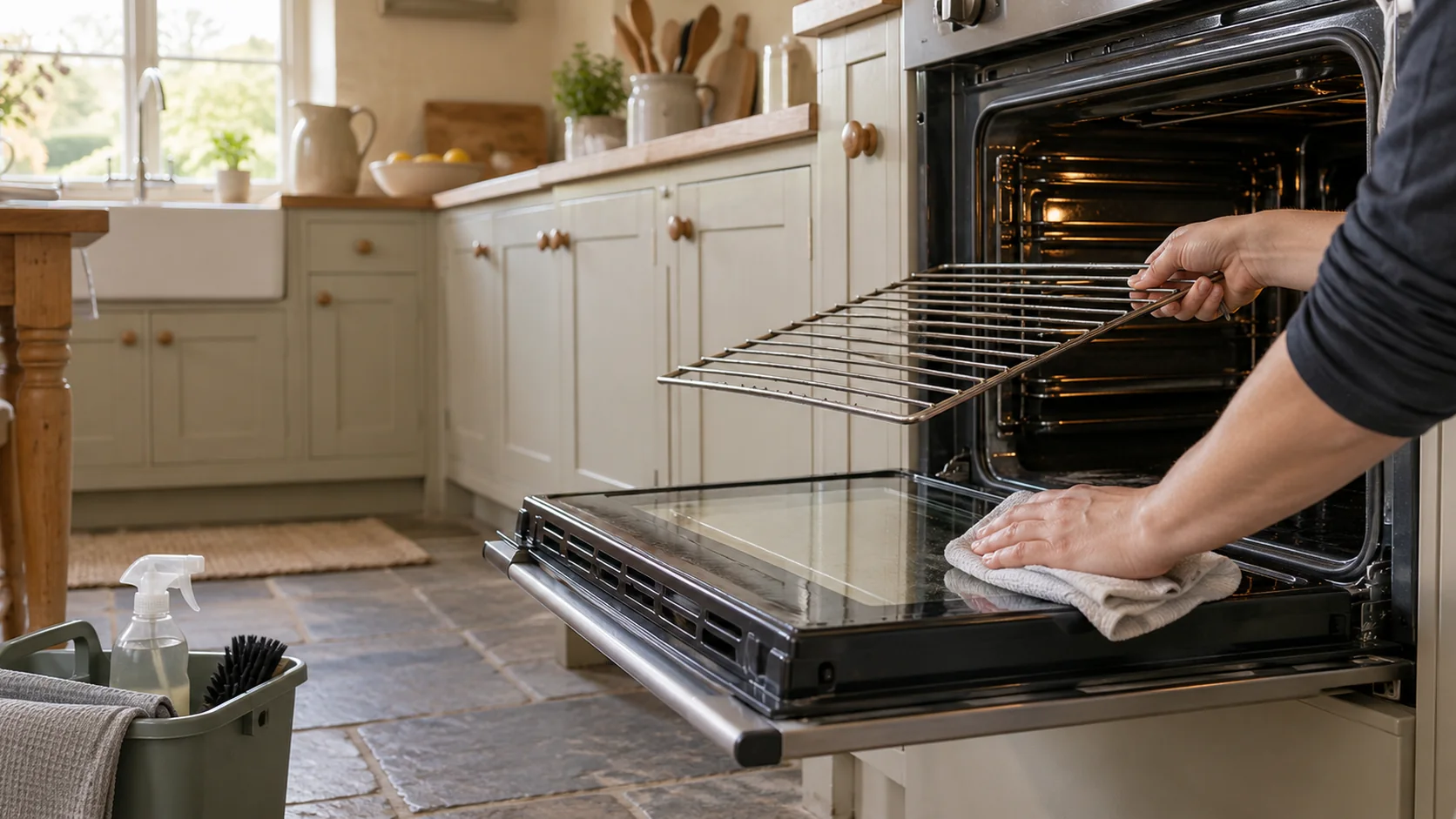
- Inside the oven, including the shelves and the door glass
- Around the cooker and fridge, as far as you can reach without moving them
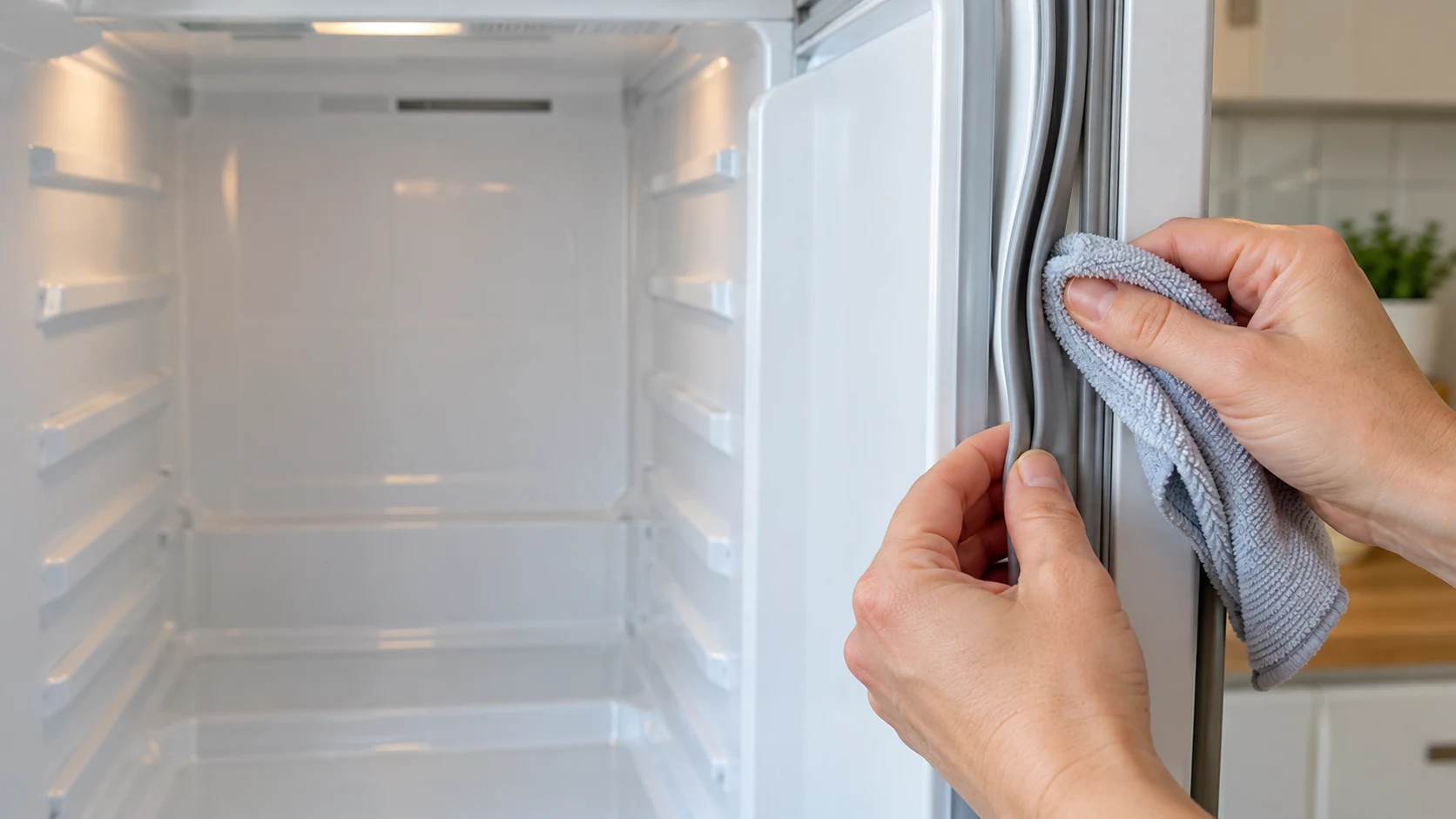
- Inside the fridge with the shelves and drawers taken out, including the folds of the door seal
- Cupboard and drawer interiors, emptied fully, including the cutlery tray
- Small appliances: the toaster crumb tray, the inside of the microwave, and the kettle and its stand, following each one's instructions
- The dishwasher filter and door edges, plus the washing machine drawer and seal if it lives in the kitchen
- The bin interior and the floor where the bin stands
With the cupboards empty, compare what is there with what the listing or welcome guide says guests will find. Note anything chipped, cracked or worn, and anything that no longer matches what the listing describes. Damaged items go on the repair or replacement list, while a simple mismatch may only need the listing or welcome guide updating.
Bathroom grout, sealant and extractor fans
The changeover should already include a thorough bathroom clean. The deep-clean work here focuses on edges, fittings and anything hidden by a panel or a cabinet door.
- Grout lines and sealant along the bath, basin and shower tray
- The showerhead, hose and taps, where limescale gathers in the holes and around the base
- Shower screen runners, door seals and the corners of the tray
- The outer surface of the extractor fan cover, wiped in place, and the ceiling around it
- Behind the toilet, around its base and along any exposed pipework
- Plugholes and the reachable part of each waste
- Under the basin, along the edge of the bath panel and inside cabinets, emptied
- Towel rails, hooks and the tops of mirrors
Watch for anything that cleans up and then returns quickly. Marks may keep coming back on the same stretch of sealant, or grout may stay dark however it is cleaned. Keep cleaning it so the room is ready for each stay, and add it to the repair note with a photo so the cause can be looked into.
Showerheads, taps and outlets guests rarely use
Limescale on a showerhead is more than a cleaning job. HSE's guidance on Legionella for landlords, which on our reading includes holiday lets, says to clean showerheads regularly. It also says outlets on hot and cold water systems should be used at least once a week, so water doesn't sit still in the pipes.
Take each showerhead off, or soak it in place, and descale it with a product made for the job, then clean and disinfect it following the product's instructions. Do the hose and the holder at the same time. Add the date to your deep-clean list, so you can see how quickly the limescale comes back.
A deep clean is also a good time to find the outlets guests barely use: a second shower, a utility sink or a garden tap. If one hasn't been used for a week, run it until the water temperature is steady, then for one more minute, before the next guests arrive, keeping the spray as low as you can, and write down that you did it. HSE says most landlords can assess the risk in a simple domestic water system themselves, so if you haven't yet, do it before your next busy season.
Bedrooms and soft furnishings
A freshly made bed is only part of a clean bedroom. Check when the bulky items around it were last done. Washing and drying them takes time, which is the main reason they belong in a longer slot.
- Pillows, duvets and mattress protectors, washed as their care labels say and replaced when they're worn
- Mattresses, checked for marks and turned or rotated if the design allows it
- The floor under the beds and the wall behind headboards
- Wardrobe and drawer interiors, hanging rails and spare hangers
- Curtains, blinds, curtain poles and the tops of wardrobes
- Lampshades, bedside lights and ceiling fittings
- Decorative cushions and throws that are not part of the changeover wash
A spare set of pillows or a spare duvet for each bed gives you the option of making up the bed with one set while the other is washed and dried. Before each stay, check that whichever set goes on the bed is clean and fully dry. Note on the deep-clean list which set is in use and when each was last washed.
Sofas, rugs and radiators in the living room
Living areas and hallways are where guests sit, eat, play and drop bags. Much of the build-up in these rooms hides in or under the furniture.
- Sofas and armchairs, including under the cushions, down the sides, behind and underneath
- Rugs, lifted so the floor below and the underside of the rug can be cleaned
- Skirting boards, door frames and the wall around light switches
- Radiators, including the gaps behind and between the panels
- Bookshelves, games and puzzles, checked for missing pieces as well as dust
- The undersides of dining chairs and tables, where spills and marks build up
- Hall hooks, boot racks and the floor at the entrance
- Outdoor tables, chairs and cushions, if the property has them
Take a moment to sit where a guest would sit. Some things are easier to spot from a seat than from a standing walkthrough. Look for smudges on the wall beside a sofa, a dusty picture frame at eye level or a stain on the underside of a cushion.
Carpets, rugs and upholstery need a deeper clean now and then, either with a hired machine or by a carpet cleaner. Book it for a gap long enough for everything to dry before the next guests arrive, because damp fabric left in a closed, cold room can start to smell. Keep the heating on and a window open while it dries. Test any product on a hidden patch first, check the care labels on removable covers, and ask the cleaner how long their method needs before the room can be used.
Windows, doors and storage
Your changeover routine can cover the handles, edges and glass that guests touch. Frames, tracks and tops still gather dust and grit over time. Storage spaces that guests rarely see deserve a look too.
- Inside glass, frames and sills, plus the tracks or drainage channels of sliding windows and doors
- Outside glass and frames, where they are part of your planned window cleaning
- The tops of doors, the hinge side edges and the letterbox
- Patio and back door thresholds where grit collects
- The cleaning cupboard, linen store and any spare stock, sorted and wiped
- The bin store or outdoor bin area
Sorting the linen store and supply cupboard doubles as a stock check, so note what needs replacing before the next order. The property may be quieter in the colder months. If so, the deep clean can share a visit with winter checks for frozen pipes, heating and empty weeks, which makes better use of a long gap in the calendar.
Products and kit for the deep clean
Keep a separate deep-clean kit at the property, so whoever does the job isn't working from the changeover supplies or bringing their own. A useful kit holds:
- Microfibre cloths in two colours, one for the kitchen and one for bathrooms
- A descaler for showerheads, taps and the kettle
- A degreaser for the oven and extractor hood, plus a scraper for the oven glass
- A mould and mildew cleaner, which GOV.UK's damp and mould guidance recommends over bleach
- A vacuum with crevice and upholstery tools, and an extendable duster for the tops of cupboards and curtain poles
- Gloves, and eye protection where a product's label calls for it
Use one product at a time, follow the label and never mix cleaning products. Check the care instructions before using anything strong on stone worktops, wooden floors or enamel, and keep the kit locked away from guests.
Repairs found during a deep clean
A deep clean brings you closer to many surfaces than a changeover does, so you may notice things that need fixing. You might find, for example, a loose hinge, sealant lifting from the tray, a sticking drawer runner, a cracked tile or a stained mattress. For each one, decide whether it needs dealing with before the next arrival or can wait for a planned maintenance job. Anything that can wait goes on a list, which helps keep the cleaning visit to its planned scope.
Keep a separate repair note and add to it as you go. For each item, write down:
- Where it is, described precisely enough for someone else to find
- What is wrong, with a photo if words are clumsy
- Whether it affects the next guest or can wait for a planned job
- Who will deal with it, if that is already clear
Review the note after each visit. Give every item an owner and a next action, such as booking a repair, ordering a part or checking it again at the next changeover. Record the date when each item is done.
For anything that needs a tradesperson, finding holiday let maintenance contractors early covers how to find and brief local trades before you need them.
Extra cleaning after a difficult stay
Sometimes a single stay leaves the property needing more than a changeover: food trodden into a rug, a stained mattress, or grease across the oven and hob. Before anything is cleaned, photograph and date each problem, and keep the receipts or invoices for the extra cleaning or any replacement. If anything is missing as well, a holiday let inventory with dated checks shows what was there before the stay.
If the booking came through Airbnb, Airbnb asks hosts to file a reimbursement request in its Resolution Center within 14 days of the guest's checkout. On other platforms, check the help centre for the time limit and the evidence it asks for before you contact the guest. Keep your first message to the guest factual: what you found, the photos and what it cost to put right. Handling a holiday let guest complaint without caving or escalating covers how to keep a difficult exchange from turning into a dispute.
Then decide whether the next guests can still arrive on time. If a room can't be made ready, tell them before they travel.
How often to deep clean a holiday let
Plan deep cleans from what the property shows you, not a fixed interval. Note which rooms, fabrics and fittings show marks first and when build-up starts to appear. After a few months, those notes tell you when each room is due.
Useful triggers include:
- A run of busy weeks, or a booking that was harder on the property than usual
- Build-up in the same place that whoever does the changeover has started to notice
- A gap in the calendar long enough for the slower jobs
- A change of season, when you are already planning other upkeep
The deep clean doesn't have to happen all at once. Split it by room or zone, with the kitchen in one gap and the bathrooms and bedrooms in another, rather than waiting for an empty week. Record what you did and when, so the next decision comes from notes rather than memory.
If someone else helps with changeovers, agree who notes build-up and who does the deep-clean jobs. Coordinating a cleaner or co-host without duplicating your checklist shows how to keep one shared list you both work from.
Briefing someone else on the deep clean
If you pay a cleaner or a cleaning company for the deep clean, give them the job in writing. A clear brief stops the visit turning into a longer changeover, and it gives you something to check the work against. Include:
- The rooms or zones for this visit, with their prompts from your deep-clean list
- The time available, when the property is empty and how they get in
- Where the kit is, and anything they should bring
- Surfaces that need care, such as stone worktops or a wooden floor
- The photos you'd like afterwards, such as inside the oven, the fridge seals and under the beds
- How to report anything broken or worn, so it reaches your repair note
Agree the price or the hours before the visit, and what happens if the job takes longer. At your next visit, check a few of the photographed spots in person.
Keeping your deep-clean list short
A deep-clean list can grow quickly as visits turn up new corners. Keep it useful by treating it as a set of prompts rather than a full inventory of the building. Order each room's prompts in the sequence you walk it, from top to bottom, and add a column for the date each item was last done. Note roughly how long each room takes, so you can match zones to gaps in the calendar. If something has needed no attention for several visits, check it less often rather than deleting it, and keep anything the next guest needs on the changeover list, even if it only comes round occasionally.
Keep each room to a short block of prompts. After each deep clean, review all three lists together. Keep recurring guest-readiness tasks on the changeover list, periodic prompts on the deep-clean list and faults on the repair note, and move anything that has ended up in the wrong place.
Booking your first deep clean
Open your booking calendar and find the next gap that can hold more than a normal changeover. Block it for deep cleaning before it fills. Choose the room that has shown the most build-up recently, and print that room's prompts with space for notes. Afterwards, write down how long it took and anything for the repair list. Then decide which room goes into the following gap.