
Holiday let property maintenance checklist: weekly, monthly and seasonal routines that stop small problems becoming emergencies
The difference between a holiday let that runs smoothly and one that generates constant fire-fighting is usually a short, repeatable check done at the right time. This page gives you the full checklist for every cycle.
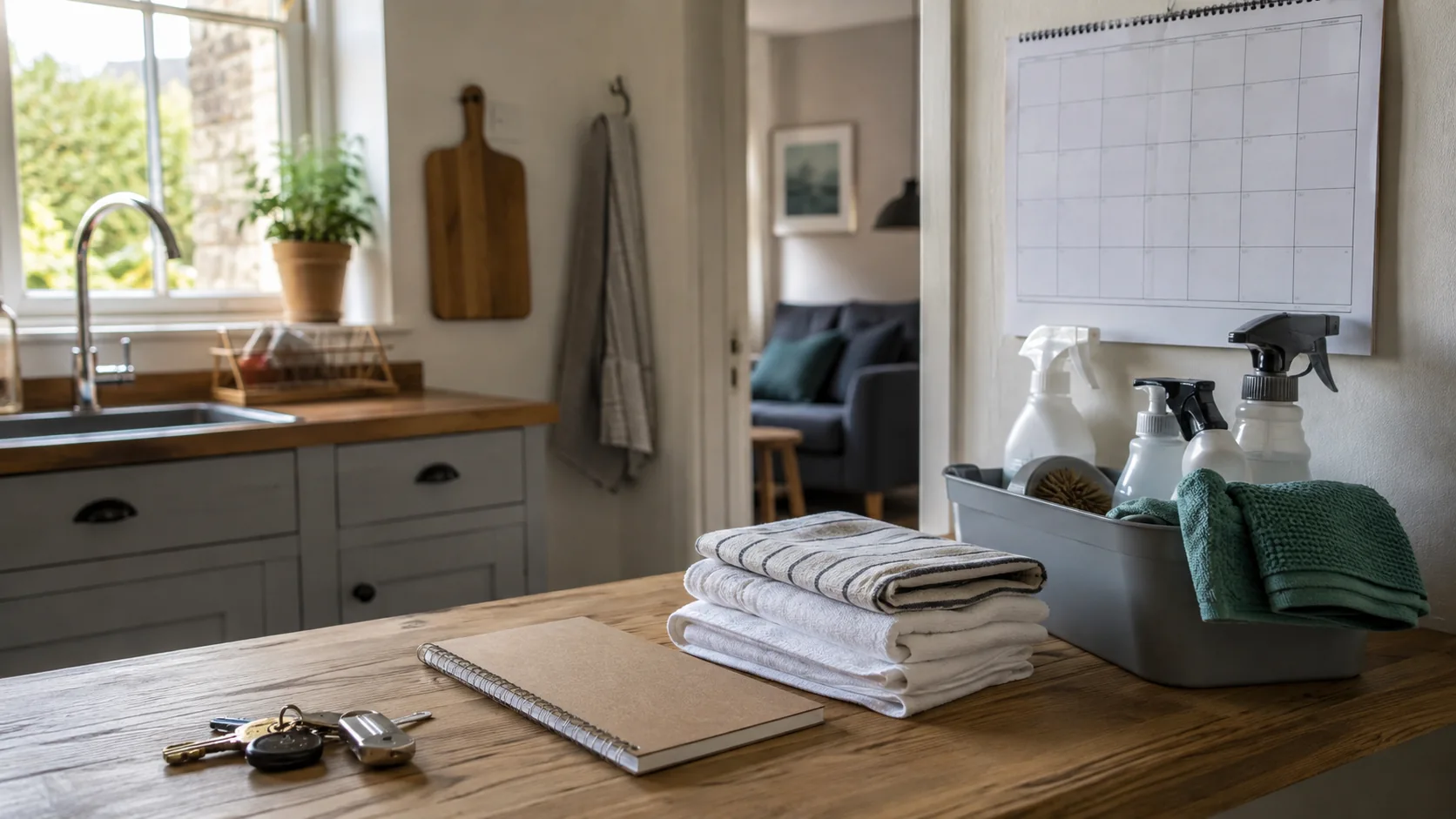
Most property problems start small. A slow leak under the kitchen sink. A smoke alarm with a flat battery. A fridge seal that is not quite closing. None of these ruin a guest's stay on day one, but all of them will show up in a review if no one checks between bookings. This page breaks maintenance into four layers: between-guest quick checks, weekly tasks, monthly inspections, and seasonal jobs.
Between-guest quick checks: 15 minutes that protect your next review
These happen at every changeover, either by you or whoever does the changeover. They are fast visual and functional checks, not deep maintenance. Build them into your changeover process so they happen automatically.
- Hot water: Run the hot tap in the kitchen and bathroom for 60 seconds and confirm it reaches full temperature. If the property has been empty for a week or more, run every tap and shower, hot and cold separately, until the water temperature is steady, then for one more minute (usually 2 to 5 minutes in all), to flush out standing water, which is a basic Legionella control. Open showers and spray taps gently, or remove the shower head first, so the water runs as a stream rather than a fine spray.
- Heating: Switch the heating on briefly and check at least two radiators get warm. In summer, this still matters. Guests will try the heating on a cold evening, and a seized valve or airlocked radiator is a common complaint.
- Appliance doors and seals: Open and close the fridge, freezer, oven, and dishwasher doors. Check the rubber seals are intact and the doors close firmly. A fridge with a weak seal runs constantly and freezes food in the wrong places.
- Lights: Turn on every light in the property. Replace any dead bulbs. Guests rarely report a blown bulb. They just mention "the bedroom light didn't work" in their review.
- Toilet flush and fill: Flush every toilet. Check it fills and stops. A running toilet wastes water and keeps guests awake.
- Windows and locks: Check that all windows close and lock properly. Check the front door lock with the key or code the guest will use.
- WiFi: Connect to the WiFi on your phone and load a page. Do not assume it is working because the router lights are on.
Weekly tasks: stay ahead of your next 14 days of bookings
Even if you do not visit the property every week, spend 15 minutes on these tasks remotely. If you manage from a distance, ask whoever does your changeovers, or a local contact, to do a quick visual check.
- Review upcoming bookings: Look at the next 14 days. Confirm every changeover is scheduled so whoever is doing the cleaning knows the arrival times, guest count, and any special requests (cot, high chair, late check-in).
- Close out issues from the last stay: Check your messages for anything guests reported. A "the shower pressure seemed low" message needs investigating before the next guest arrives, not after.
- Flush little-used outlets: If a bathroom, en-suite or shower is not used during a week, run its taps and shower until the water temperature is steady, then for one more minute, and flush the toilet. HSE guidance is to flush infrequently used outlets at least weekly. If no one visits the property that week, ask whoever does your changeovers or a local contact to do it.
- Consumables audit: Confirm you have enough toilet rolls, bin bags, dishwasher tablets, washing-up liquid, tea, coffee, sugar, and cleaning supplies for the next set of guests. If you provide milk, check the delivery timing.
- Exterior check (if local): Walk around the outside. Bins in the right place? Garden path clear? Anything obviously wrong with gutters, windows, or the roof line? In autumn, clear leaves from paths and drains.
- Booking platform check: Scan your listings for new reviews, messages or platform notifications. Reply to reviews promptly; a short, polite public reply shows future guests you pay attention.
Monthly inspections: stop small jobs from becoming expensive repairs
Once a month, go deeper. These tasks take 30 to 45 minutes at the property, or you can combine them with a changeover visit.
- Test smoke alarms and CO detectors: Press the test button on every alarm. If any alarm does not sound, replace the battery or the unit immediately. Do not wait until next month.
- Check under sinks and around toilets for leaks: Look for damp patches, drips, or mould. A slow leak under the kitchen sink can rot a cabinet in a few weeks. Behind the toilet is another common spot.
- Inspect window seals and frames for condensation or mould: In cooler months, condensation on windows means moisture is building up. Wipe it down, check the trickle vents are open, and consider a dehumidifier if it is persistent.
- Check washing machine and dishwasher hoses: Look for cracks, bulges, or weeping joints. These hoses fail more often than you would expect, and a burst hose with no one in the property can cause thousands of pounds of water damage.
- Review guest messages for recurring themes: If three guests in a row mention the oven is confusing, add a label or a note in the welcome guide. If two guests mention the bedroom is cold, check the radiator valve and the window seal.
- Check spare bedding and towels: Count your spare sets. Replace anything stained, thinning, or mismatched. Guests notice tired towels.

Seasonal maintenance: quarterly jobs that protect the property year-round
Break these into four seasonal blocks. Not every task applies to every property, so start with this list and trim it to fit yours.
Autumn (September to November)
- Clear gutters and downpipes of leaves and debris
- Check the roof for slipped or cracked tiles (binoculars from the ground are fine for a basic check)
- Bleed all radiators and check the boiler pressure (usually 1 to 1.5 bar when cold; check the boiler manual)
- Service the boiler (combine this with the annual Gas Safety Certificate if timing works)
- Lag any exposed pipes in unheated areas (loft, garage, under the property if it has a crawl space)
- Check exterior lighting and replace bulbs, as guests arriving from October onwards often arrive in the dark.
- Store or cover garden furniture
Winter (December to February)
- If the property will be empty for more than a few days, keep the heating on low (12 to 14 degrees) to prevent frozen pipes
- Check for draughts around doors and windows and fit draught excluders where needed
- Ensure paths and steps are clear of ice and moss (consider keeping grit or salt at the property)
- Test the hot water immersion heater as a backup if the boiler fails
- Check the stopcock turns freely so you can shut off the water quickly in an emergency
Spring (March to May)
- Deep clean the property (carpets, upholstery, oven, behind appliances)
- Touch up paint on scuffed walls, door frames, and skirting boards
- Service the lawnmower and strimmer if you maintain the garden
- Check outdoor furniture, clean it, and replace anything broken
- Update listing photos if the garden or exterior looks noticeably better than the current shots
- Review and restock the welcome pack or guest information folder
Summer (June to August)
- Check window restrictors are in place and working (especially upstairs windows in family-friendly properties)
- Clean the BBQ, check the gas bottle, and test the ignition
- Inspect any outdoor play equipment for wear and stability
- Check the garden hose and outside tap for leaks
- Review your compliance dates and book any renewals due in the next quarter
- Check mattresses and pillows for sagging, stains, or wear and replace if needed
Keep one issue list instead of scattered messages
The system only works if issues get recorded somewhere central. A shared note, a Google Sheet, or a simple list in your phone with four columns:
| Date | Issue | Who owns it | Resolved? |
|---|---|---|---|
| 12 Sep | Dripping kitchen tap | Plumber | Yes, fixed 15 Sep |
| 14 Sep | Spare pillows getting flat | You | Ordered, arriving 18 Sep |
| 18 Sep | Guest asked about recycling | You | Done, note added to welcome guide |
When an issue is reported by a guest, by whoever does the changeover, or by your own inspection, it goes on this list. When it is fixed, mark it done. When you do your weekly check, scan the list. If something has been sitting there for more than two changeovers, it is time to escalate.
Free tool
See all free tools
Property Upkeep guides5 guides
Search all guidesWhat to do when a holiday let guest reports a fault mid-stay
Stabilise a fault during a guest stay, choose the right help and communicate before discussing compensation.
How to keep a holiday let inventory that shows what's gone missing
What to list in each room, which items to count at every changeover, and what to do when something is missing or broken
Finding holiday let maintenance contractors early
How to source, check and brief local trades for your holiday let, agree response and access terms, and keep a second name ready for each urgent job.
Damp and mould in holiday let accommodation: finding the cause before you clean
Tell condensation from leaks and building defects, check the rooms that trap moisture between stays, answer guest reports fairly and know when to call a professional.
Holiday let winter maintenance: frozen pipes, heating and empty weeks
Keep the heating, pipes and water in good order through cold spells and empty weeks, with a weekly check that fits around winter bookings.