
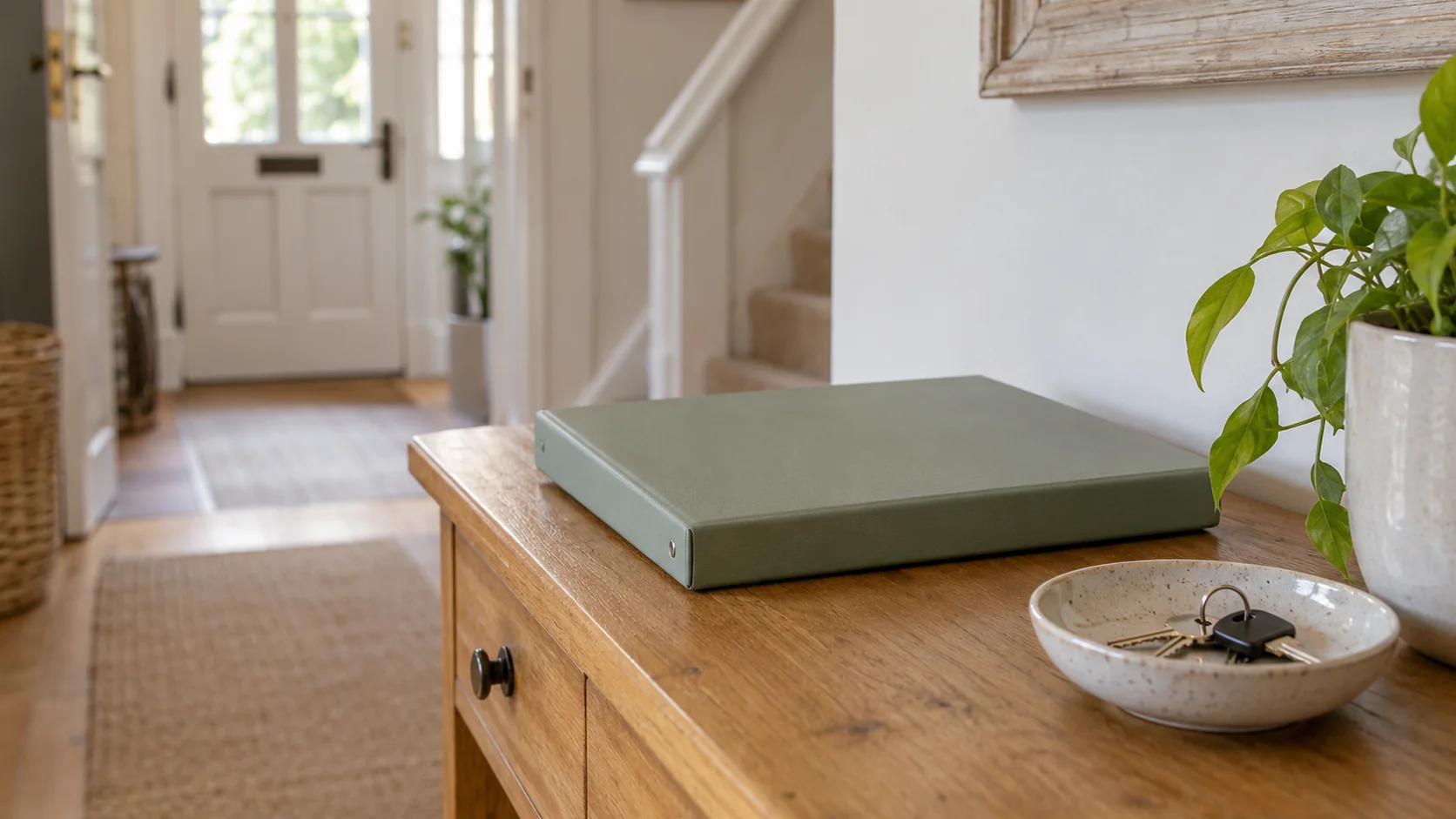
A holiday let welcome guide, sometimes called a welcome book, works when it answers the questions guests would otherwise message you about, in the order those questions come up during a stay. That puts arrival and the first evening at the front, the emergency page where anyone can find it in a hurry, and your local tips at the back. Read on for what to include in each part, how to keep it short enough that guests read it, and whether to print it, share it digitally or do both.
What a welcome guide is for
A welcome guide does a different job from your guest messages. Your messages get guests to the door: the booking confirmation, the directions, the access instructions and the code. The welcome guide covers everything once they're inside, from how the heating works to which bin goes out on which day. The holiday let check-in message sequence covers those messages in detail; what follows covers the welcome guide.
Keeping the two separate means each message stays short, and guests can find an answer at nine at night without scrolling back through a conversation. It also cuts the questions you answer by hand. If the same question arrives twice from different guests, the answer belongs in the guide.
The guide is also where your property's quirks get explained once, properly: the shower that takes a minute to run hot, the back door that needs lifting as it locks, the oven that runs hot on the left. Guests forgive a quirk they've been told about far more readily than one they discover.
Before you write anything, look back through the messages guests have sent you, or ask whoever does the changeover what they find guests have struggled with. Those questions are your contents list. Typical ones are the Wi-Fi, the heating, the TV, the oven, the bins and parking, but your own property will have its own: a gate code, a tide time, a shower with a separate pump switch.
What goes on the first page
The first page is the one every guest reads, often while still holding their bags. Put the things they need in the first hour on it, and nothing else:
- A short welcome in your own words, with your name and how to reach you
- The Wi-Fi network name and password
- How to turn on the heating and hot water, in one or two lines
- Where to find the emergency page, the stopcock and the consumer unit
- The checkout time, and where to find the checkout steps
- Anything that matters on the first evening, such as which bin to put out or where the spare toilet rolls are
If something needs more than two lines, give it a line on the first page and the full explanation further in.
Arrival and the first evening
Write this part for a guest arriving in the dark after a long drive. Start with where to park and anything about the parking that could catch them out, such as a shared drive or a permit to display. Then the keys: where they live during the stay, how the door locks behind them, and what to do if a key is lost.
Then the lights, especially outside lights on a timer or a sensor, and the heating, if they arrive to a cold house. Add how to get the TV working, because it is one of the first things a tired family tries. Finish with what's already in the property for them, such as tea, milk or a few breakfast basics, so they don't go looking for a shop that has closed.
If guests often arrive late, say where the torch is and which lights are on a timer, and what to do if they can't find something before morning: message you, and say by when you'll reply. A late arrival who knows an answer is coming will usually wait for it rather than ring you at midnight.
Explaining the heating, hot water and appliances
This is the part of the guide that saves the most messages. For each control a guest is likely to touch, write what it does and what to press, in the order they'll press it. Leave out anything they shouldn't touch, and say so: "Please leave the boiler settings as they are; if the radiators stay cold, message me."
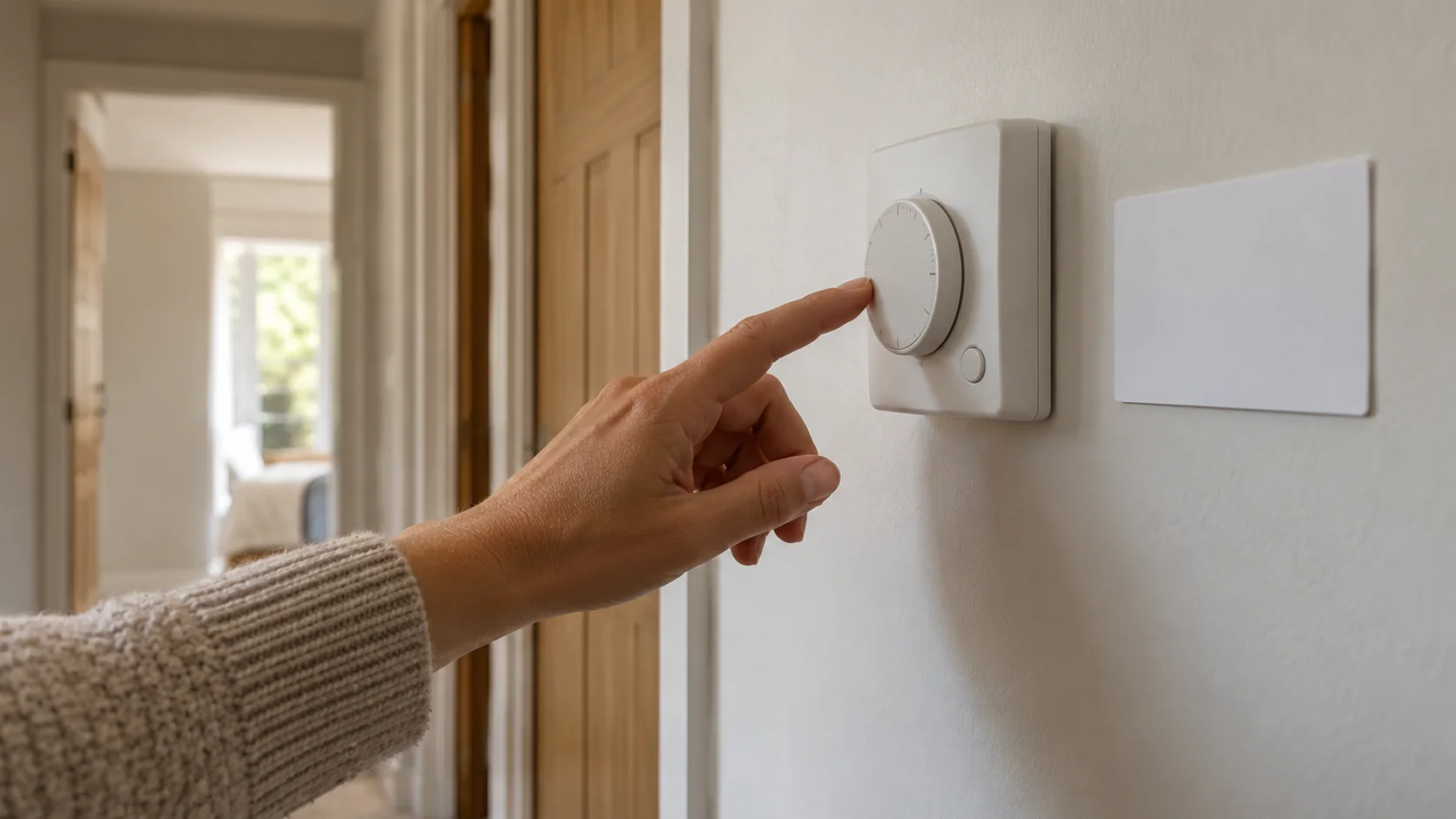
Next to the thermostat or any control that confuses people, fix a small card with the same two or three lines, so the instruction is where the question arises. A photo of each control in the guide helps too, so guests can match what they see on the wall with what they read. If you change the setting the property runs on in empty weeks, check the card still matches after every winter changeover; holiday let winter maintenance covers the heating settings themselves.
Hot water deserves its own line. If it runs on a timer, say when it's hot and how to boost it; if it comes from a cylinder that takes time to reheat, say roughly how many showers it covers before guests need to wait.
Cover the appliances in the order guests use them: the hob and oven, the dishwasher and how to load the tablet, the washing machine and dryer if guests may use them, the coffee machine, the TV and any streaming device. A line each is enough for most. Add a line for anything with a trick to it, such as a hob lock or a dryer filter that needs emptying.
Wi-Fi, the TV and streaming
Put the Wi-Fi network name and password on the first page and again here, with where the router is and what to do if the connection drops: switch the router off at the plug, wait a minute and switch it back on. If there are rooms where the signal is weak, say so, so guests don't message you to report a fault that isn't one.
For the TV, say which remote does what, how to switch between the aerial and any streaming device, and which apps are there. If you provide streaming apps, log them in to accounts set up for the property rather than your own, and ask guests to sign out of any personal accounts they use, such as their own streaming or music service, before they leave. Ask whoever does the changeover to check that guests have done so.
Bins, recycling and collection days
Bins cause more messages than almost anything else, because every council does them differently. Say where each bin lives, what goes in each one, and which day each is collected, with a photo of each bin if they look alike. If guests staying over a collection day should put a bin out, say which one and where to leave it.
Say what to do with glass, food waste and anything the bins won't take, and where the nearest recycling point is if guests have more than the bins hold. Put the same information on a small card inside a kitchen cupboard door, where guests look when the kitchen bin is full.
The emergency page
Give the emergency page its own page, and tell guests on the first page where it is. Keep it to what someone needs in a hurry, with the property's address and postcode at the top, so a guest can read it out to a call handler. The holiday let guest information checker shows what your welcome guide is missing, safety items first, and prints a one-page emergency sheet to leave in the property.
| Situation | What to do | Who to call |
|---|---|---|
| Fire | Get everyone out using the escape route, then call | 999 |
| Smell of gas | Open the windows, don't use switches or flames, leave the property, then call | 0800 111 999 in England, Scotland and Wales; 0800 002 001 in Northern Ireland |
| Power cut | Check whether neighbours are affected, then call | 105 in England, Scotland and Wales; NIE Networks in Northern Ireland |
| Water leak | Turn off the water at the stopcock, then message you | You, then the plumber you've named |
| Locked out or lost key | Stay where you are and call | You, or your local contact |
| Anyone hurt or unwell | Call for help straight away | 999 |
Under the table, say where the stopcock, the consumer unit and the gas meter are, with a photo of each, and where the fire extinguisher and fire blanket are kept. Add the nearest A&E and minor injuries unit, with their addresses. What fire information guests need depends on your fire risk assessment; fire safety for holiday lets explains what being the responsible person means for you.
If something breaks and no one is in danger, guests need to know how to tell you and what happens next. Say how quickly you reply and what counts as urgent. When a report does come in, what to do when a holiday let guest reports a fault mid-stay covers the steps from your side.
House rules in the guide
Put your house rules in the guide in full, but lead with the few that matter most to your property and the people around it, such as quiet hours, the number of guests, smoking and pets. A rule guests have read before they break it is far easier to raise than one they never saw.
Write each rule with its reason where the reason helps: "Please keep music low after 10pm, because the bedroom next door belongs to a neighbour who works early." A reason turns a rule into a request most guests are happy to meet.
The same rules belong in your listing and in a message before arrival, so the guide is the third time guests see them, not the first. Keep the wording identical in all three places, so a guest who points to one can't find a different version in another.
Children, pets and getting around the property
If you welcome families, say what's available for them and where it's kept: a travel cot, a high chair, a stair gate, plug socket covers. Flag anything a parent would want to know on arrival, such as steep stairs, a pond in the garden or a window that opens wide.
If you accept dogs, say where they're allowed, where to walk them from the door, where to wash muddy paws and what to do with waste. If you don't, say so here too, and note that assistance dogs are welcome, because refusing an assistance dog is usually unlawful. Add anything that helps guests with limited mobility, such as the number of steps to the door or which bathroom has a level shower.
Checkout steps
Guests want to leave the property as you'd like, but they need telling what that means. Keep the steps short, and ask only for what helps the changeover:
- Leave the keys where you found them, or in the key safe
- Put used towels in the bath or the laundry basket
- Load and start the dishwasher
- Take the rubbish and recycling to the bins outside
- Close the windows and turn the heating back to the setting on the card
- Lock the door behind you
Don't ask guests to strip the beds or clean unless your listing says so. If you'd like a message when they leave, say so here; it tells whoever does the changeover they can start.
Say too whether guests can ask for a late checkout, and by when. Whether you can agree depends on the next booking, so asking guests to message you the evening before gives you time to check the calendar and answer properly.
Where to eat, shop and walk nearby
The local section is where the welcome guide can sound like you. Keep it short and personal: the nearest shop and its opening hours, the nearest pharmacy, a pub or two you'd recommend, a walk from the door, a wet-day option, and anything about the area guests wouldn't find easily, such as a beach that floods at high tide or a car park that fills by ten. Add a local taxi firm, the nearest bus stop or station, and the walk or drive time to each, because guests without a car need these first.
Check opening hours and details at least once a year, and after any guest says something has closed. An out-of-date recommendation makes the rest of the guide look out of date too.
Add a line for each season if the area changes through the year: which places close in winter, where to go when the beach car park is full in August, or which footpath turns to mud after rain. Guests read this part before deciding what to do with a day, so a few well-chosen local tips go further than a long list.
Writing it so guests read it
Write the way you'd explain the property to a friend standing in the hallway. Use short sentences, one instruction per line, and the words guests use, such as "the heating" rather than "the central heating system". Headings should be the questions guests ask: "Wi-Fi", "Heating", "Bins", "Checkout".
Use photos for anything physical: a control, a switch, where the bins live. Leave out anything guests don't need during the stay, such as the history of the house or a long welcome, or keep it to a paragraph at the back. Writing holiday let guest message templates that sound like you covers how to keep your own voice when you write instructions once and reuse them.
Printed, digital or both
A printed guide in the property is the one guests reach for when they need an answer now, so keep one there even if you share it digitally. Put it somewhere obvious, such as the hall table or the kitchen worktop, and say on the first page where it lives.
A digital copy lets guests read it before they arrive, which is when the parking and first-evening parts are most useful. Send a link or a PDF with your pre-arrival message, or use a digital guidebook from your property management software or a dedicated guidebook tool, and check what it costs on the provider's own pricing page. Keep the printed and digital copies identical, with the date of the last update on both, so a guest never finds two different Wi-Fi passwords. A printed QR code on the first page that opens the digital copy lets guests carry it on their phones during the stay. If many of your guests come from abroad, a translated first page and emergency page help most, as long as the numbers and addresses match the English version exactly.
Updating the guide between seasons
Keep one master copy on your computer or in your property management software, and print from it, so there is only ever one version to correct. Update the guide the day anything changes: a new Wi-Fi password, a replaced appliance, a different bin day. Check it in full once a year, and at each deep clean look at the printed copy for missing pages, stains or notes added by guests.
Ask guests now and then what they couldn't find in it. If a question comes up from two different stays, add the answer. Over a season, the questions you answer by message will tell you exactly which pages are missing.
Two pages to write first
Start with the two pages that matter most: the first page and the emergency page. Write them, print them and put them in the property before the next arrival. Then add the heating and appliance pages, the house rules and the checkout steps over the following weeks, using the questions guests send you as your list of what to write next.
Before the guide goes in the property, test it on someone who has never stayed there. Hand them the first page and the heating section, and ask them to get the Wi-Fi working and the hot water on without asking you anything. Every point where they hesitate is a line to rewrite.