
Holiday let compliance checklist: the safety certificates and legal requirements most UK holiday lets need
Running a holiday let in the UK means juggling gas certificates, electrical reports, fire safety, insurance, and local registration rules that vary by nation. This checklist covers what you need.
General information, not legal advice. Rules differ between England, Scotland, Wales and Northern Ireland, and each section links to the official source. Checked October 2026.
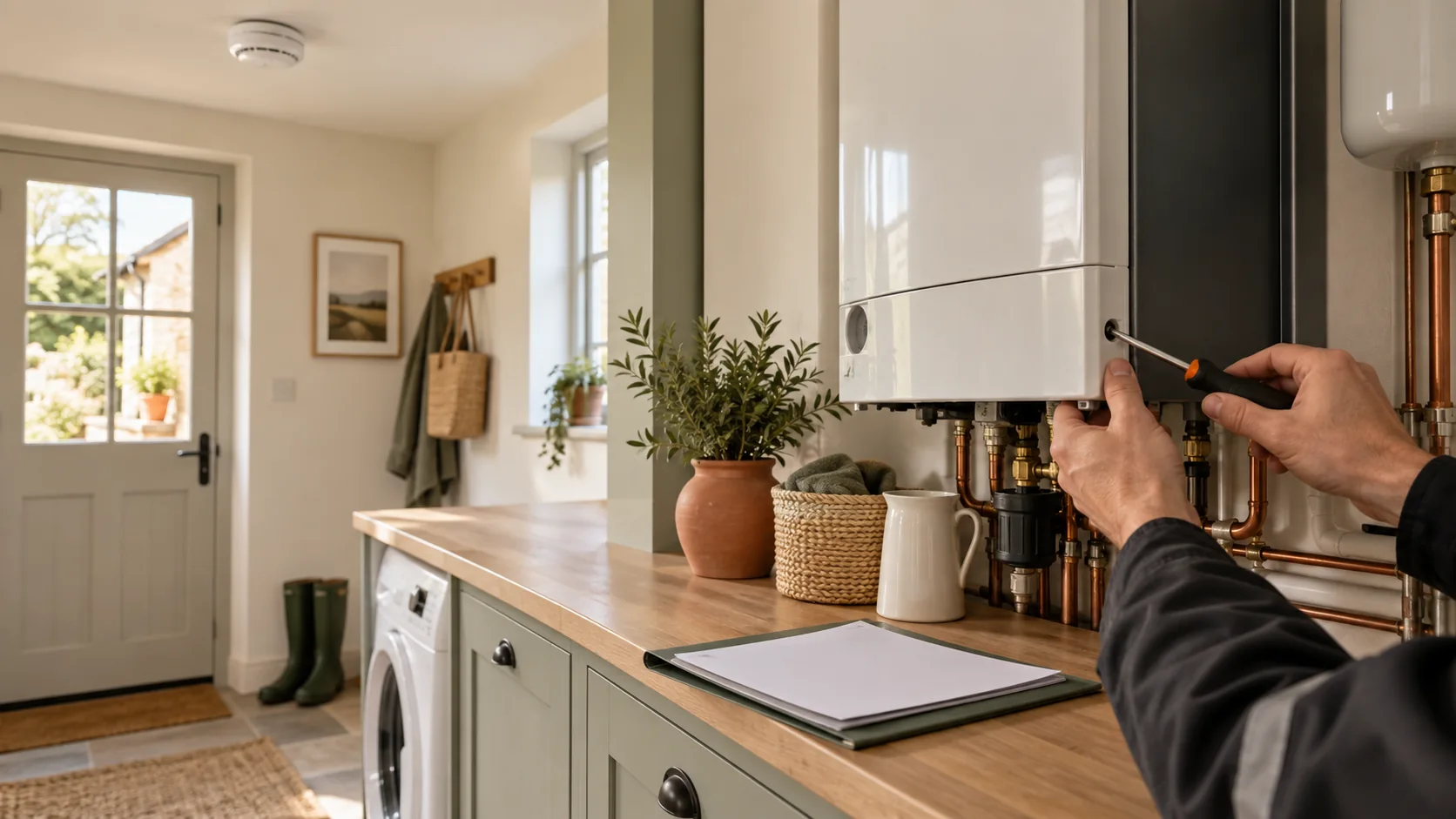
Gas safety certificate (CP12): the one you cannot afford to miss
Every holiday let with gas appliances needs a gas safety check every 12 months by a Gas Safe registered engineer, who checks each appliance, the pipework and the flues, and gives you a Landlord Gas Safety Record (often called a CP12). The record is issued whether or not faults are found, and any faults it lists need fixing before guests stay.
Timing: In Great Britain you can have the check done up to two months before it is due and keep the original renewal date, so there is no reason to cut it fine. Northern Ireland has not brought in this rule, so there the next check is due 12 months after the last one.
Who can do it: Only a Gas Safe registered engineer. Check their ID card and registration on the Gas Safe Register website before they start.
What to keep: Keep each record for at least two years. For short stays you can display a copy in a prominent place in the property rather than giving one to each guest.
Gas emergency: 0800 111 999 in Great Britain, 0800 002 001 in Northern Ireland. Put the number in your welcome guide.
Electrical installation condition report (EICR): the standard every 5 years
An EICR tests the fixed wiring in your property: the consumer unit, circuits, sockets, and light fittings. A qualified electrician (registered with a scheme such as NICEIC or NAPIT) will grade each circuit as C1 (danger, fix immediately), C2 (potentially dangerous, fix soon), C3 (improvement recommended), or satisfactory.
Frequency: In England, the five-yearly EICR rule for rented homes is written for tenancies, but the government's guidance for holiday homes tells hosts to follow the same electrical safety standards, and insurers commonly ask for a report. In Scotland, an EICR at least every five years is a condition of the short-term let licence. Treat five years as the default everywhere.
What a fail looks like: Any C1, C2 or FI (further investigation) code makes the report unsatisfactory, and the remedial work needs doing and confirming in writing before guests stay.
Portable appliance testing (PAT): check everything guests plug in
PAT testing covers any electrical appliance guests might use: kettles, toasters, hairdryers, lamps, TVs, the lot. A PAT tester visually inspects each appliance and does a quick electrical safety test, then stickers it with a pass date.
Frequency: England and Wales set no fixed interval, and annual testing is common practice. In Scotland, PAT testing is part of the electrical safety condition of the short-term let licence. Your insurer may also require it.
DIY or professional: You can test appliances yourself if you are competent to, but most hosts use a qualified tester so there is an independent record.
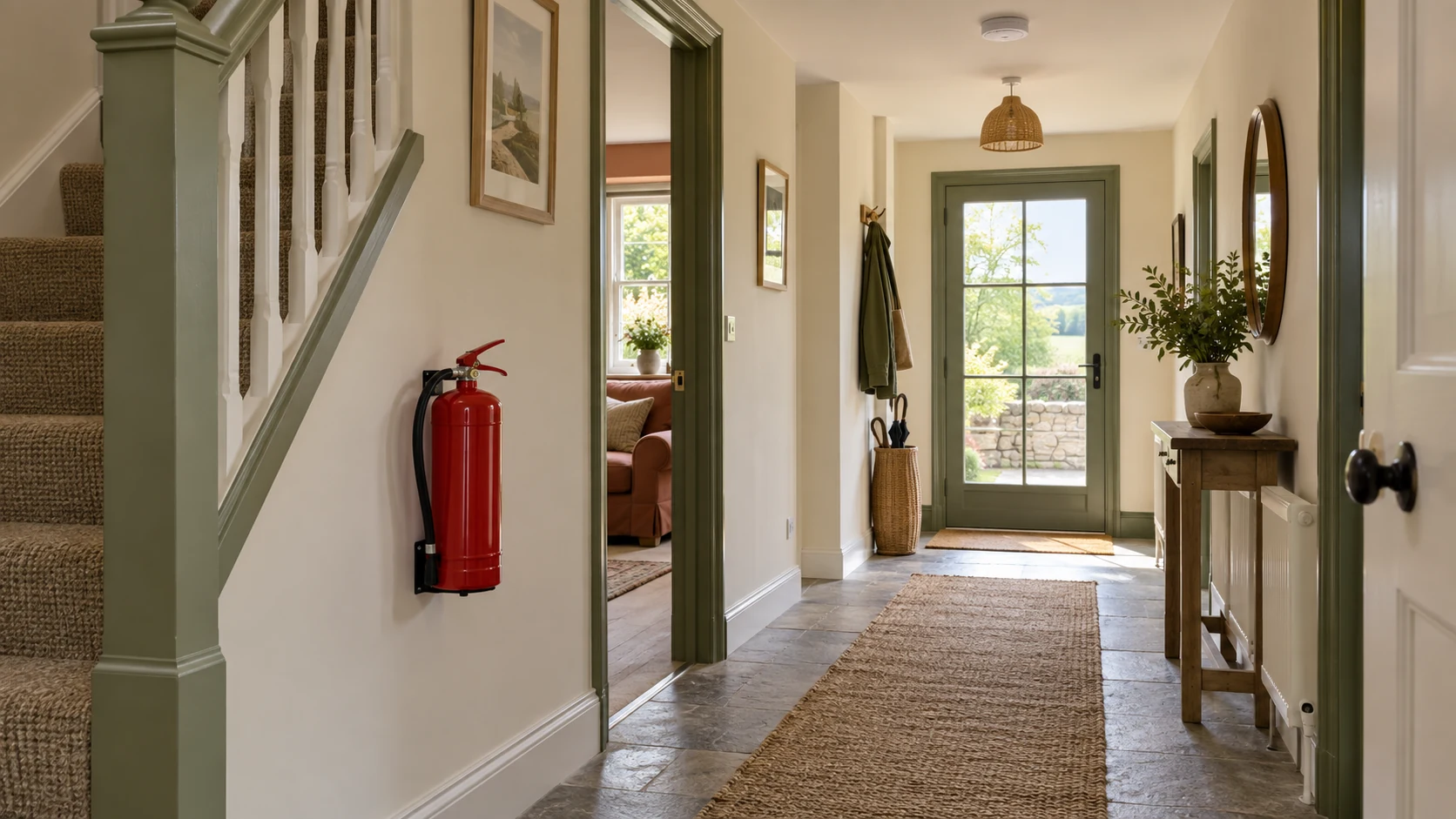
Fire risk assessment: a legal requirement for all holiday lets
You must carry out a fire risk assessment for any property let as holiday accommodation: under the Regulatory Reform (Fire Safety) Order 2005 in England and Wales, Part 3 of the Fire (Scotland) Act 2005 in Scotland, and the Fire and Rescue Services (Northern Ireland) Order 2006. In England, the government's guidance on making small paying guest accommodation safe from fire explains what is expected.
What it includes:
- Identify fire hazards (faulty wiring, portable heaters, blocked escape routes)
- Assess who is at risk (guests unfamiliar with the property, children, less mobile guests)
- Evaluate existing fire safety measures and whether they are enough
- Record the findings and any actions needed
- Review and update when anything changes (new furniture, layout changes, new appliances)
Smoke and CO alarms: Fit smoke alarms on every floor, and a carbon monoxide alarm in any room with a fixed fuel-burning appliance such as a boiler, gas fire or wood burner (gas cookers are the usual exception). The fire safety guidance explains what type of alarm system your property needs. Test alarms regularly, ideally at each changeover, and replace sealed units before their expiry date.
Scotland: Short-term lets must have interlinked alarms: a smoke alarm in the main living room and in every hall and landing, a heat alarm in the kitchen, and a carbon monoxide alarm wherever there is a fuel-burning appliance or flue.
Energy Performance Certificate (EPC): check whether you need one
In England and Wales, a holiday let needs an EPC only if it is let for a combined total of 4 months or more in any 12 months and the guests pay for their own energy. The government has consulted on requiring an EPC for every short-term let, so check the current position before you rely on this. In Scotland, the short-term let licence requires one. An EPC lasts 10 years and is produced by an accredited domestic energy assessor.
Minimum rating: The minimum EPC rating rules for rented homes in England and Wales apply to properties let on a tenancy, which most holiday lets are not. Check the current position on GOV.UK if you let on longer tenancies as well.
Insurance: cover built for short-term letting
No law requires public liability insurance for a holiday let, but the government's holiday home guidance says you should have dedicated holiday let insurance with public liability cover. If a guest is injured at the property, you can be personally liable for the claim. Look for a policy that includes:
- Public liability cover (usually £1m to £5m)
- Buildings and contents cover adapted for short-term letting
- Loss of rental income if the property is damaged
- Accidental damage by guests
Standard home insurance usually excludes short-term letting, and Airbnb's AirCover is not a substitute for your own policy. Insurance for self-managed holiday lets: what a standard home policy misses explains what to check.
Legionella risk assessment: a duty for every holiday let
HSE says landlords must assess and control the risk from Legionella bacteria in the water system. Its guidance covers anyone letting a property under a lease or licence shorter than 7 years, which on our reading includes holiday lets. Legionella grows in water that sits between 20 and 45°C, especially where it is left standing.
What to do:
- Carry out a risk assessment. HSE says most landlords can do this themselves for a simple domestic system; use a competent specialist if the system is more complex. Review it when anything changes.
- Store hot water at 60°C or above.
- If the property is empty for a week or more, run every tap and shower, hot and cold separately, until the water temperature is steady, then for one more minute (usually 2 to 5 minutes in all), before the next guest arrives, and flush any little-used outlets at least weekly (see the weekly checks on the Property Upkeep page).
- Clean and descale shower heads regularly.
TV Licence: required when guests watch live TV
If you provide a TV or any other device guests can use to watch live TV or BBC iPlayer, you need a TV Licence for the holiday let. Holiday let owners use TV Licensing's hotel and mobile units licence, which costs £180 a year and covers up to 15 units on a single site.
Common confusion: Your home TV Licence does not cover your holiday let.
Planning, licensing and registration: the rules in each nation
The rules on whether you need planning permission for holiday letting vary significantly:
- England: Most holiday lets do not need planning permission, but in Greater London you need permission to let a home short term for more than 90 nights a year. A national registration scheme for short-term lets is on the way but not yet in force.
- Scotland: Every short-term let needs a licence from the local council; hosts who let without one can be fined up to £2,500 and banned from applying for a year. Some areas, including Edinburgh, are control areas where you also need planning permission.
- Wales: Planning rules now separate main homes, second homes and short-term lets, and councils can require permission to switch between them. Anyone taking bookings for stays of 31 nights or less must register each property on the Welsh Revenue Authority's visitor accommodation register, which opened on 1 October 2026; existing hosts have until 31 March 2027.
- Northern Ireland: You need a certificate from Tourism NI before you let. Letting without one can mean a fine of up to £2,500, up to 6 months in prison, or both.
Holiday let registration and licensing: why England, Scotland, Wales and Northern Ireland differ covers each nation in detail.
Build a renewal tracker so nothing expires unnoticed
Keep every item above in one place with its last date, expiry date and the contractor's details, and set a reminder 8 to 10 weeks before each expiry. The Templates page has a compliance renewal tracker you can copy.
Official starting points: GOV.UK holiday home guidance (England), mygov.scot short-term let licences, Welsh Government planning guidance.
Free tools3 tools
See all free tools
Holiday let compliance checker: what applies to your let and when it's due
Choose where your holiday let is and tick what it has. You'll get every check that applies, whether the law requires it or official guidance asks for it, and the date each one is next due.

Holiday let business rates tracker: are you on track for the letting test?
Enter the nights you've let, booked and blocked so far this year. You'll see whether your holiday let is on track for its nation's business rates test, and how many more nights it needs each month to get there.
Holiday let water flushing planner: when to run the taps while it's empty
Enter the dates your holiday let will be empty and name its taps, showers and toilets. You'll get the dates to flush the water through and a record sheet for every visit.
Compliance & Safety guides9 guides
Search all guidesBuilding your holiday let compliance file before your first guest, not after
What goes in the file, which checks are legal duties and which are insurer or licence conditions, and what to book first because it has a waiting list.
Do holiday lets need an EPC? The exemption, the Scottish rule and what to keep on file
When a holiday let in England or Wales is exempt from needing an Energy Performance Certificate, why Scotland has no general exemption, what Northern Ireland's guidance says, and how to record your answer
Can I holiday let my property? Mortgage, lease, planning and insurance checks
The five permissions that decide whether you can holiday let a property, the order to check them in before you spend money, and what to do if one of them says no
Fire safety for holiday lets: what "responsible person" means for you
Understand the responsible-person role and organise the fire-safety checks your property needs.
Gas and electrical safety certificates for holiday lets: what they prove and when to renew
Why a valid certificate isn't the same as a safe property today, which checks are legal duties in each UK nation, and how to renew without a gap.
Holiday let registration and licensing: why England, Scotland, Wales and Northern Ireland differ
What each UK nation requires before you let a holiday home, and how licensing, registration, planning and business rates fit together.
Insurance for self-managed holiday lets: what a standard home policy misses
Where a standard home policy stops covering a holiday let, the four covers to check, and the questions that expose a relabelled "specialist" policy.
A bookkeeping system for holiday lets that survives tax season
Track the money side of a self-managed holiday let without losing the records behind each booking.
Furnished holiday let tax basics: what changed and what you still need to track
What ended in April 2025, how holiday lets are taxed now, and the records and questions that matter before your next return.