
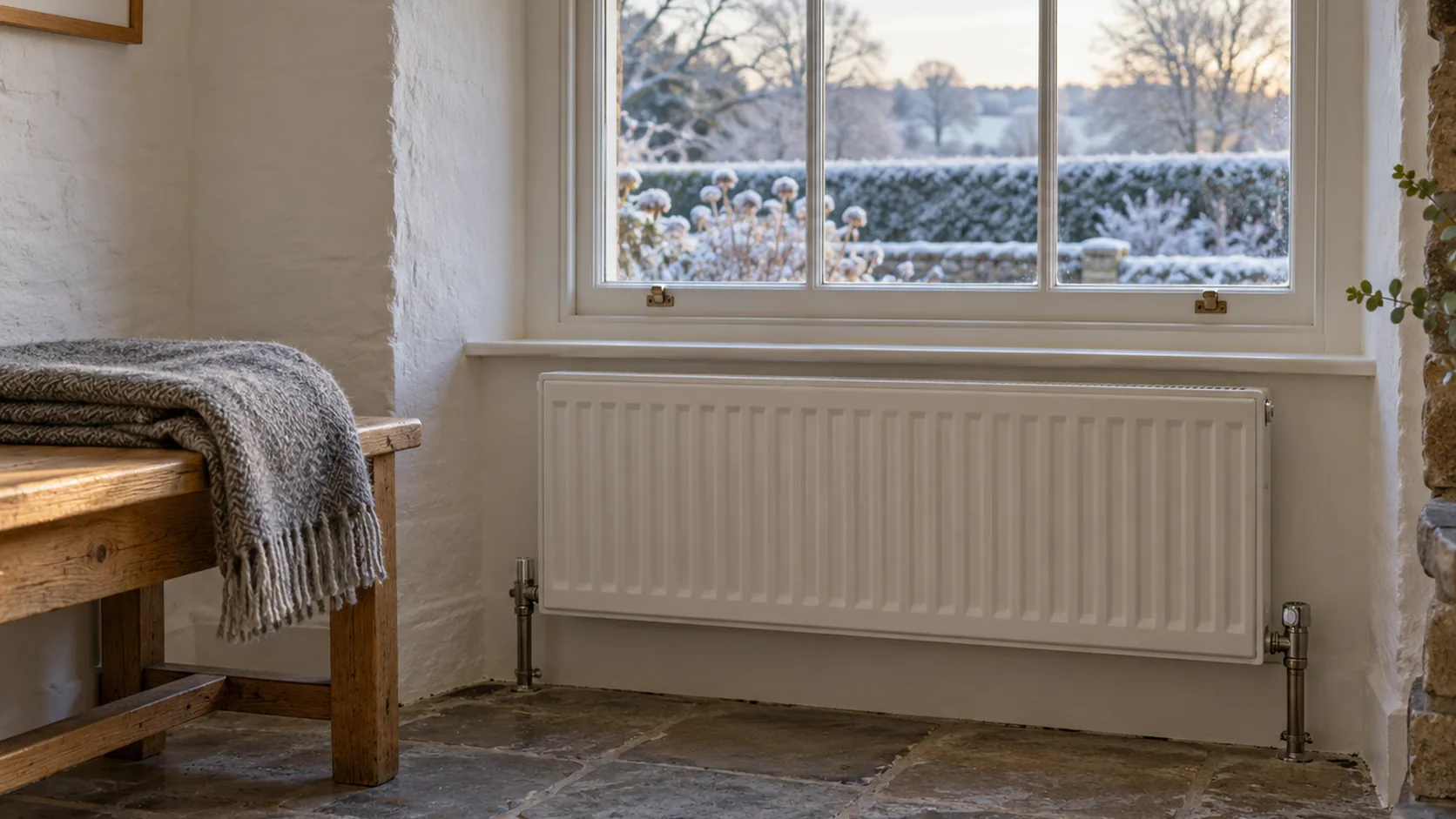
HSE's guidance for landlords says that when a property is left empty, its hot and cold outlets should be used at least once a week so the water doesn't stagnate. That weekly visit is the backbone of holiday let winter maintenance, because it is also when you find a cold radiator, a damp patch or a boiler showing a fault before a guest does. Below is a routine for autumn preparation, empty weeks and cold snaps, plus what changes when the property is booked again.
What winter does to an empty holiday let
A holiday let in winter swings between two states. Some weeks it's full of guests running showers, cooking and keeping the heating high. Other weeks it's closed up, cold and quiet, and those are the weeks that need a plan.
Pipes in unheated spaces, such as the loft, a garage, under the floor or along an outside wall, are the first to freeze. A frozen pipe often gives no sign until it thaws, when a split joint can leak for days before anyone walks in. Cold rooms also collect condensation, which leaves damp and mould on window frames and behind furniture. And water left standing in pipes and showerheads for weeks raises the legionella risk that the weekly flushing below is there to control.
None of this needs a big budget to prevent. It needs the heating set sensibly, a few jobs done before the first frost, and someone walking through the property on the same day each week.
Autumn jobs before the first cold snap
October or early November is the time to prepare, while there's still room to fix anything the checks turn up before you rely on the heating every day.
- Book the boiler service. In Great Britain, if the annual gas safety check falls in winter, HSE allows it to be done up to two months early while keeping the original anniversary date, so the two visits can often be combined.
- Bleed the radiators and check each one heats evenly from top to bottom.
- Lag exposed pipes in the loft, the garage and any cupboard on an outside wall. Foam pipe insulation is cheap and quick to fit on runs you can reach.
- Turn off and drain outside taps if they have an isolating valve inside, or fit an insulated cover.
- Find the stopcock, check it turns, and tie a plain tag to it so whoever visits can find it quickly.
- Test every smoke and carbon monoxide alarm, and replace any that are past the replace-by date marked on them. Press the test button on each one to check it sounds, and keep spare batteries for any that take replaceable ones. A carbon monoxide alarm matters most in winter, when fuel-burning appliances run the longest. Fire safety for holiday lets covers which alarms you need and where.
- If there's a cold water tank in the loft, check it has a tight-fitting lid, which HSE lists as one of the simple legionella controls.
- Clear gutters and check the outside lights, because winter guests often arrive after dark.
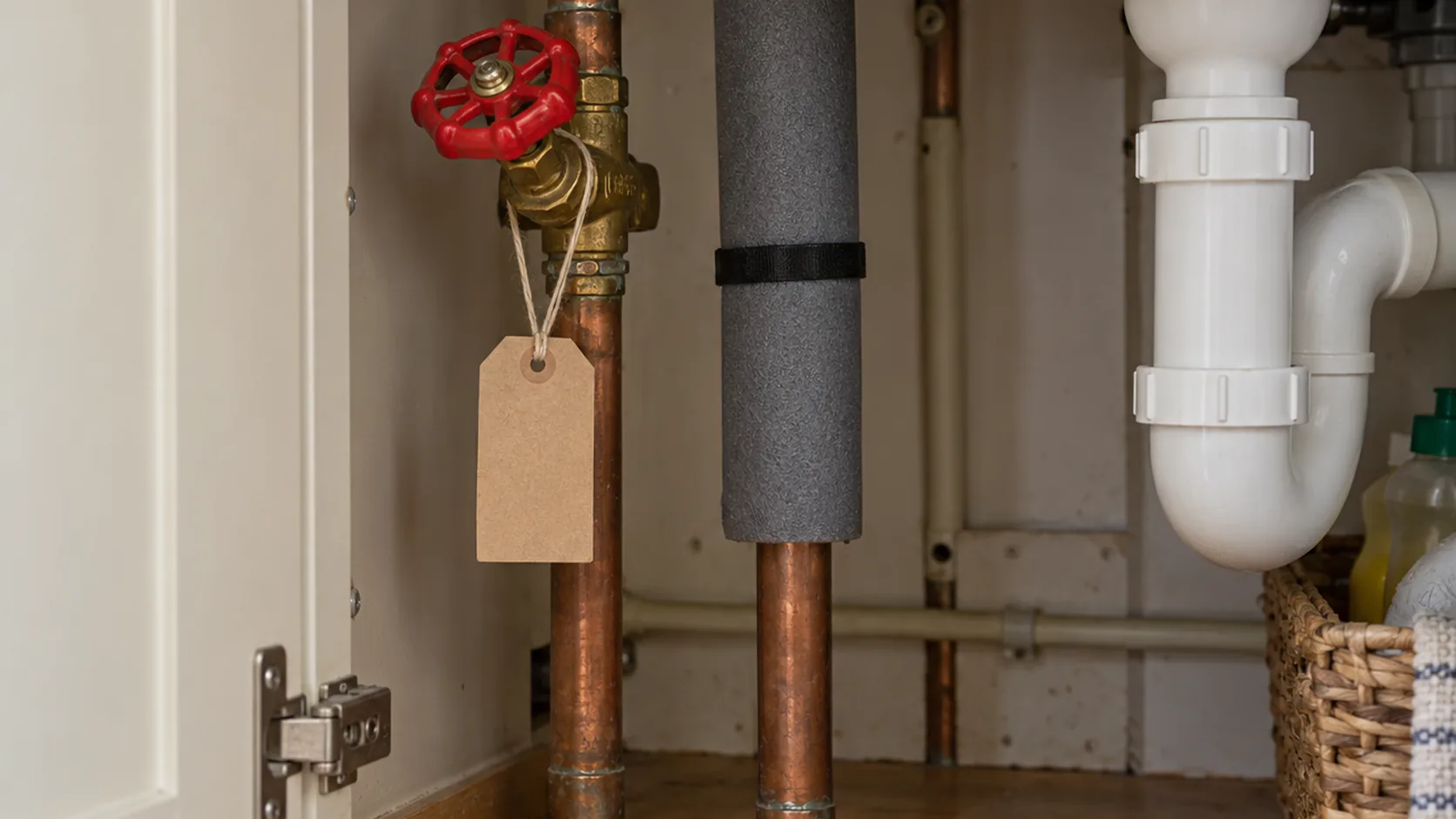
The boiler service and gas check are the two jobs to book first. The guide to gas and electrical safety certificates for holiday lets covers renewal dates and early checks in more detail.
Setting the heating for empty weeks
Turning the heating off between winter bookings saves a little fuel and risks a much bigger repair bill. The safer default is to leave it on low, on a schedule, so the whole property stays above freezing, including the rooms furthest from the boiler.
Where the thermostat sits matters. If it's in a warm hallway, a back bedroom above an unheated garage can be much colder than the reading suggests. Leave internal doors open so warm air reaches every room, and in a hard frost leave the loft hatch slightly open if the tank and pipes are up there.
Many boilers and thermostats have a frost setting. Treat it as a backstop rather than the plan: check in the manual when it switches on, and remember that it only responds to the temperature at its own sensor.
If you live some distance away, remote monitoring helps. A thermostat you can check from your phone, or a simple temperature sensor that sends an alert, tells you the heating has stopped before a pipe freezes. Check what it does after a power cut or a Wi-Fi drop, and test the alert before you rely on it.
Before winter, read the part of your insurance policy that deals with periods when the property is empty, and make your heating and visit routine match what it says. For what a standard home policy misses, see insurance for self-managed holiday lets.
Heating controls for winter guests
Most winter heating complaints come from the controls, not a fault. A guest turns the thermostat to its highest setting, switches the boiler off at night to save you money, or can't work out why the radiators are cold when the timer is off. Any of those can end in a cold property, a wasted callout or a frozen pipe after they leave.
Decide which controls guests need and which they don't. Most need only the room thermostat and, where there is one, a boost button for the hot water. If your thermostat lets you set a minimum temperature or lock the schedule, use it, so the property never drops below your empty-week setting whatever a guest does. Leave the boiler's own controls as they are, and ask guests not to change them.
Put a short note by the thermostat: what to press for more heat, how long the boost runs, and who to message if the radiators stay cold. A photo of the controls in the welcome guide helps guests who arrive after dark. Ask whoever does the changeover to check the thermostat and schedule at every winter changeover, because a setting one guest changes carries over into the next empty week.
How to run the weekly visit in an empty week
The weekly visit can be done by you, by whoever does the changeover, or by a neighbour you trust with a key. What matters is doing it in the same order every time, so nothing gets skipped when it's dark and cold.
- Before you go in, look at the outside: overflowing gutters, water dripping from an overflow pipe, or ice on the path and steps.
- As you open the door, notice any smell. If you smell gas, stop the visit there: open doors and windows, turn off the gas at the meter control valve if it's safe to, and call the National Gas Emergency Service on 0800 111 999, or 0800 002 001 in Northern Ireland.
- Check the boiler display for a fault code, and the pressure gauge against the range in the manual.
- Feel a radiator in the coldest room, and look at the ceilings under the bathroom and loft for fresh marks.
- Run every hot and cold tap and each shower, one at a time, until the water temperature is steady, then for one more minute, keeping the flow gentle to limit spray, and flush every toilet.
- Wipe condensation off the windows and check any trickle vents are open.
- Check the heating schedule is still set and the thermostat shows what you expect.
- Write the date, the thermostat reading and anything you found in the property log before you leave.
A guest stay counts as use for the taps and showers the guests used. Outlets they may have skipped, such as a second bathroom, a spare en-suite or an outside tap, still need running, and once a gap runs past a week, someone needs to go in.
Planning for longer empty periods
Heating, water and visits by length of gap
Match the routine to the longest gap in the booking calendar.
| How long it's empty | Heating | Water | Visits |
|---|---|---|---|
| A few days between bookings | Low, on its schedule | No extra flushing | Check remotely if you can |
| One to three weeks | Low, on its schedule | Run every outlet weekly | Weekly visit |
| A month or more | Low, or drained down by a plumber | Weekly flushing, or a full flush before reopening if drained | Weekly, even if drained |
Draining down the system is an option HSE mentions for properties left vacant for long periods. In most properties it's a job for a plumber, and it means the property can't take a last-minute booking, so for a holiday let that takes winter guests, heating on low with weekly visits is usually the more practical choice.
Before the first guests after a long gap, flush the whole system through, let the hot water come up to temperature and clean the showerheads. HSE's landlord guidance recommends flushing the system before letting, storing hot water at 60°C where there's a cylinder, and cleaning showerheads regularly.
How to handle a frozen or burst pipe
A pipe that has frozen but not split usually shows up as a tap with no flow on a cold morning. Turn the water off at the stopcock before it thaws, so that if the pipe has split the leak stays small, then warm the area gradually by turning the heating up. If you can't find the frozen section or aren't confident, call a plumber rather than applying heat to the pipe yourself.
A burst pipe needs the water off first. Close the stopcock, open the cold taps to drain the pipes, and keep away from any light fittings or sockets that water has reached. Don't touch the consumer unit if it is wet or you would have to stand in water to reach it. Then call a plumber, and an electrician if water has reached the wiring.
Take photos before you clear anything up, keep every invoice, and note the dates the property can't be let. Tell your insurer as soon as the water is off.
Power cuts in cold weather
A power cut stops most central heating, even when the boiler runs on gas or oil, because the pump, controls and ignition all need electricity. Frost settings and remote thermostats stop working too, and a sensor that relies on Wi-Fi may not send an alert until the power returns.
In England, Scotland and Wales, call 105 to report a power cut or find out when it will be fixed. It puts you through to the company that runs the local electricity network, not the supplier you pay. In Northern Ireland, report it to NIE Networks.
If guests are staying, message them first with what you know, and tell them where the torches are. Keep two working torches with spare batteries somewhere obvious, and leave candles out of the property, because they add a fire risk in a place guests don't know. Ask guests to switch off the oven, hob and any heaters they were using, so nothing comes back on unattended when the power returns. If the property is empty when the power goes off on a cold night, treat it like a missed weekly visit. Once the power is back, check the boiler has restarted, reset any fault and look for leaks before the next guests arrive. Some boilers need a manual reset after a power cut, so put the reset steps on your winter sheet.
Winter bookings and guest arrivals
When a booking lands in an empty stretch, bring the heating up in good time. A property that has sat on low for a fortnight can take several hours to feel warm, so set the schedule to raise it the day before arrival and check that it has worked.
Add a line to the pre-arrival message saying where to find the heating note and what to do if the boiler shows a fault. If it does show a fault code, ask guests to send you a photo of the display before they try anything, so you can tell whether it needs a reset or an engineer. The holiday let check-in message sequence shows where that line fits.
If frost is forecast, leave the path lit and gritted, and warn guests about icy steps or parking. When the stay ends, ask whoever does the changeover to set the heating back to the empty-week schedule and add anything they notice to the property log.
Snow, ice and getting in
Snow and ice cause more trouble at the door than inside the property. A key safe can freeze shut, smart lock batteries run down faster in the cold, and a steep drive can stop a car short of the front door.
Before a cold spell, change or check the lock batteries, leave a bag of grit and a shovel by the door, and tell guests where to find them. If guests rely on a key safe, have a backup ready, such as a neighbour with a spare key, so a frozen lock doesn't leave them on the doorstep.
Watch the forecast in the days before an arrival. If snow or ice is likely, message guests with the easiest route in bad weather, where to park and how to reach you. If they can't travel, check your cancellation policy and the booking platform's rules before you promise a refund or new dates.
On changeover day, ask whoever does the changeover to clear and grit the path and steps, and put the outside lights on a timer so guests don't arrive to a dark, icy path.
Before and after a winter storm
When high winds are forecast, have someone secure anything that can blow about: garden furniture, bins, parasols, a trampoline and any gate that doesn't latch firmly. Put cushions and covers inside and close any shutters. If guests are staying, message them the day before with what to expect, where the torches are, and what to do if a cable or pole comes down near the property: keep well away from it and call 105, or 999 if anyone is in danger.
Winter storms do most of their damage outside, and in an empty week it can go unnoticed until the next guests arrive. After high winds or heavy rain, have someone walk round the outside as soon as it is safe. Look for slipped or missing roof tiles, blocked gutters and downpipes, a damaged fence or gate, fallen branches near the drive, and water collecting against walls or under doors. Inside, check the ceilings under the roof and around the windows for fresh water marks.
Photograph any damage before it is cleared or repaired, and keep the photos with the date. Only make a temporary repair where it is safe to, such as moving a fallen branch off the path, and leave anything at height to a roofer. Tell your insurer promptly if there is damage, and warn any guests due soon about anything that changes their arrival, such as a parking space you can't use.
A one-page winter sheet for the property
Put the essentials on one sheet, kept in the property and on your phone: where the stopcock and consumer unit are, how to reset the boiler, what to do in a power cut, the heating schedule for empty and booked weeks, the day of the weekly visit, and the numbers for a plumber and a heating engineer who can come out in winter.
Then put the weekly visit in your calendar for every gap in bookings from November to March, and add the autumn jobs to the seasonal list on the Property Upkeep page. If you're still building your lists, the guide to building a changeover checklist from scratch shows how to set one out so whoever does the changeover can follow it.