
Health and cleaning points come from GOV.UK's damp and mould guidance for rented homes in England, the clearest official source on the subject. Checked October 2026
A common mistake with mould in holiday let accommodation is wiping it off at the changeover and treating the job as done. Cleaning removes what you can see, but if the moisture that fed the mould is still there, the same patch can come back. The work that makes a difference is spotting the clues to where that moisture comes from, whether condensation, a leak or a problem with the building, and knowing when someone qualified needs to look. That is also the fairest starting point when a guest mentions it.
Damp, mould and guest health
GOV.UK's guidance on the health risks of damp and mould is written for landlords of rented homes in England. It is also the clearest official account of the health risks, the common causes and the checks to make, which makes it a sound reference for a holiday let.
The guidance says damp and mould can harm health. The effects mainly involve the airways and lungs, but the eyes and skin can also be affected. It says the more serious the problem and the longer it is left untreated, the worse the risks are likely to be. It also says damp and mould can cause ill health in anyone, and that people with underlying health conditions, weakened immune systems and some other groups are at greater risk.
For a host, that makes a mould report a condition of the property to deal with. It is not a cosmetic note to leave until the quiet season.
Does Awaab's Law apply to a holiday let?
Awaab's Law requires social housing landlords in England to investigate and repair damp and mould hazards within set timeframes. It came into force on 27 October 2025 and is named after Awaab Ishak, a two-year-old who died after prolonged exposure to mould in his home. It is written for council and housing association homes, so its deadlines don't apply to a holiday let.
The way it works is still a sound pattern to follow when a guest reports mould: look into it quickly, tell the guest what you found and what happens next, make the room safe, then deal with the cause.
How condensation forms in a holiday let
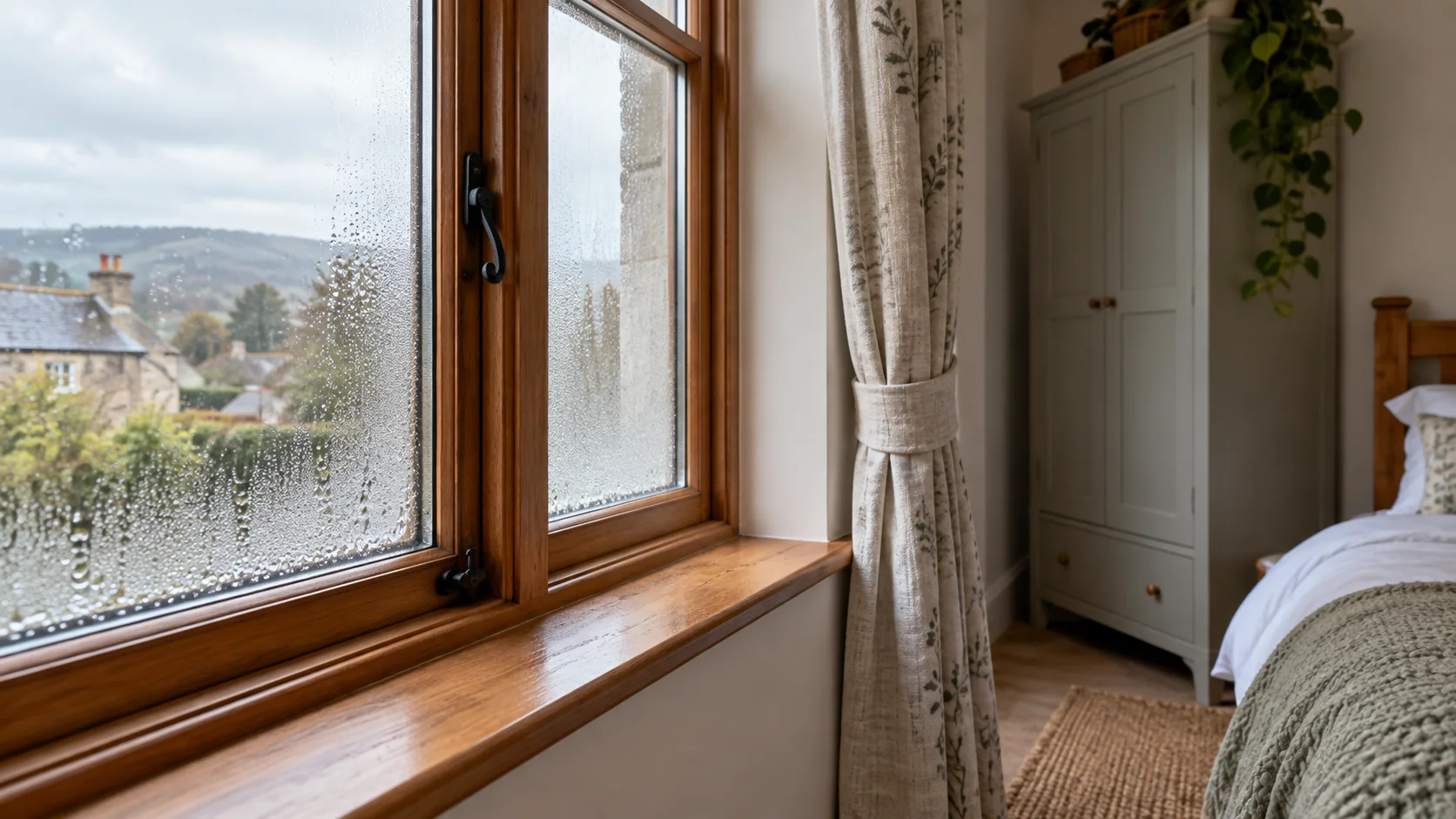
The GOV.UK guidance describes condensation as the most common form of damp. Everyday activities such as showering, cooking and drying laundry put moisture into the air. If that moisture can't be removed, it builds up and condenses onto colder parts of the building. The guidance gives window frames, corners and low points on walls behind sofas or wardrobes as examples. Over time, condensation can lead to damp and mould growth.
When a holiday let is occupied, showering, cooking and drying wet clothes and towels all add moisture to the air, and that starts as soon as guests arrive after a quiet spell. Whether the moisture has a way out depends on how well the ventilation and heating work, and on whether guests know how to use them.
Reading the signs of damp and mould
You don't need to diagnose the cause yourself. You do need to notice where the damp is and what is around it, because that tells whoever inspects it where to start. The guidance points out that damp and mould can have more than one cause, and says an inspection should consider severity, location, underlying causes and potential health risks. Treat each sign below as a clue. None of them rules out another cause, and none has a single repair or clean that settles it.
| What you see | What it may point towards | A sensible next step |
|---|---|---|
| Droplets or mould on window frames, in room corners or low on a wall behind furniture | Often linked with condensation, though a leak or defect can't be ruled out from this alone | Photograph it, check the ventilation and heating in that room, and look for other causes before deciding what to do |
| Staining near a gutter, downpipe or pipe run, or around a window with a broken seal | Possibly water getting in, or a building defect | Photograph it and arrange an inspection before any cleaning |
| An extractor fan that is broken, blocked or switched off | One possible reason moisture isn't leaving a kitchen or bathroom, not necessarily the only one | Switch it back on or clear the blockage, or have it repaired if it's broken, then watch the area to see whether the damp clears |
| A mould smell when you open up, with nothing obvious on show | Damp or mould that needs looking into, even if you can't see where | Note where the smell is strongest and arrange an inspection |
| Mould that returns after cleaning | A sign the underlying cause may not have been found yet | Book an inspection by someone qualified |
A patch low on a bedroom wall behind a wardrobe sits in one of the spots the guidance names for condensation, so the ventilation and heating in that room are sensible first checks. That doesn't prove condensation is the cause. A stain on a ceiling below a gutter may point to water getting in from outside, but it could have another source too. Where the signs are mixed or unclear, get someone qualified to inspect rather than guessing.
Rising damp, leaks and damp from next door
The GOV.UK guidance describes four kinds of damp, and knowing them helps you brief whoever comes to look:
- Condensation, covered above, is moisture from inside the property settling on cold surfaces.
- Penetrating damp is water getting in from outside through defects in walls, roofs, windows or floors.
- Rising damp is moisture from the ground rising through walls and floors. It is usually found in older properties, and the guidance says it is often misdiagnosed and that chemical testing is the most appropriate way to confirm it.
- Traumatic damp comes from leaking waste or heating pipes, overflowing baths or sinks, burst pipes or faulty water tanks. It can also come from outside, such as another building or flooding.
The guidance adds that one kind can make another worse, so finding one cause doesn't mean you have found them all. If a damp-proofing company diagnoses rising damp from a quick look, ask how they confirmed it before you agree to the work.
If the property is a flat or a terrace, the damp may be coming from the property next door or above. The guidance says to work with the owner or freeholder of that property, notes that the Land Registry can help you find out who owns it, and says the local council can act under the Environmental Protection Act 1990 if one property is causing a nuisance to another. Keep your photos and record, because they show when the damp appeared and how it has changed. If a leak has caused damage, tell your insurer early. Insurance for self-managed holiday lets covers what to check in your policy.
What to check and record between stays
These checks follow the internal and external items the GOV.UK guidance lists. Work through them in order, so the rooms that produce the most moisture come first and the outside of the building isn't forgotten.
- Start in the bathroom, shower room and kitchen. Run each extractor fan and check it isn't damaged, blocked or switched off.
- Look at the cold spots: window frames, room corners and the low wall behind sofas, beds and wardrobes. Move furniture out where you can.
- Look for visible damp, staining or condensation, and notice whether there's a mould smell when you first open up.
- Check the heating comes on and works in every room.
- Go outside and look at gutters, downpipes and visible pipes for damage or blockages. Check the seals around windows and look for any visible structural defects.
- Photograph and note anything you find before it is cleaned or repaired.
If someone else does the changeover, give them the same list and ask for photos of anything they spot. The outside checks are easy to skip when the inside looks fine, so fold them into your seasonal property-maintenance checks as well.
A simple record turns one-off patches into a pattern you can act on. For each sighting, note:
- the date, the room and the exact spot
- photos taken before any cleaning
- how it was found: a changeover check, a guest report or an inspection
- what was done, who did it, and whether the cause was identified
- whether it came back, and when
Over a season, a record like this might show the same bedroom corner marking up after fully occupied stays, or a ceiling stain that only appears after heavy rain. Either pattern gives a tradesperson a far better starting point than "there's some mould somewhere upstairs".
How to handle a guest report about mould
A guest may send a photo of dark spots on a bathroom ceiling partway through a stay. The guidance describes moisture from showering, cooking and drying laundry as part of normal everyday activity. Ordinary moisture like that doesn't, on its own, tell you what caused the mould, so check the condition of the room, the ventilation, the heating and any possible defects before drawing a conclusion, and don't open by blaming the guest.
Thank them, ask where exactly the mould is and whether it seems to be spreading, and check the obvious things with them, such as whether the extractor fan comes on. Then tell them what happens next and when you'll update them. For example: "Thanks for the photos of the bathroom ceiling. Could you check whether the fan comes on when the light is switched on? I'll arrange for it to be looked at and let you know by this evening what happens next."
Reply promptly, and keep the response safe and practical. If a guest asks whether they should wipe the mould off, thank them and explain that you'd like the cause looked at first. The guidance says tenant management of condensation and small amounts of mould should not be a substitute for assessing and dealing with the underlying issue. A wiped patch doesn't tell you why it grew.
If the mould is extensive or a guest is worried about it, treat it like any other fault that affects the stay. What to do when a holiday let guest reports a fault mid-stay sets out how to sort a fault into urgent, same-day or can-wait, and how to judge when staying put stops being reasonable.
When a guest is worried about their health
If a guest says the mould is affecting them, or mentions asthma or another health condition, act on it straight away. Suggest they speak to a healthcare professional about any symptoms, and don't wait for medical advice before dealing with the mould. The guidance is clear that medical evidence isn't needed for action.
The guidance lists the people at greatest risk, including people with asthma, COPD or other lung conditions, anyone with a weakened immune system, pregnant women, children and older people. If guests like these are staying, move them out of the affected room if the property has another, or arrange for the mould to be dealt with while they're out. Where that isn't possible, talk to them about ending the stay early, and check the booking platform's rules before you promise a refund or other accommodation.
Don't tell a guest the mould is harmless or that it's down to how they used the property. Neither is something you can know from a message, and both make a complaint more likely.
Replying to a review that mentions mould
A review that mentions mould will be read by future guests long after you've fixed the problem, so your reply is written for them as much as for the guest. Keep it short and factual: thank the guest, say what you found, what you did and when, and leave out any argument about who caused it. The GOV.UK guidance says it is unreasonable to blame damp and mould on lifestyle choices, because everyday cooking, washing and showering will always add moisture. A reply that hints the guest caused it reads badly to the next person deciding whether to book.
For example: "Thank you for letting us know about the mould on the bathroom ceiling. We had the extractor fan replaced and the ceiling treated the following week, and we now check the bathroom at every changeover." Only describe work that has been done. If the inspection is still booked, say so and give the date.
Cleaning mould or calling a professional
The GOV.UK guidance recommends photographing the area before any mould is removed and dealing with mould promptly. It says mould can be removed from hard surfaces with an appropriate cleaning product, and the surface should be left to dry completely. It also says larger areas of mould should only be dealt with by qualified professionals. It doesn't set a size at which one becomes the other, so don't assume any particular patch is automatically safe to clean.
Where there is a small amount of mould on a hard surface and you have already started looking for the cause, you or whoever does the changeover can clean it with an appropriate product and log it. The guidance recommends a mould and mildew cleaner rather than bleach, gloves, a mask and eye protection for whoever does the cleaning, and keeping the room door shut with the window open. Get a qualified professional in for these:
- mould across a larger area of ceiling or wall
- mould on soft furnishings or carpet, since the guidance's cleaning advice is about hard surfaces
- mould that keeps coming back after cleaning
- mould alongside staining that suggests water getting in
Depending on what an inspection suggests, that professional might be a damp specialist, a roofer or a plumber. If you aren't sure whether an area counts as larger, treat it as a professional job. Either way, cleaning deals with what you can see, and it doesn't replace finding the cause.
Mould on sealant, carpets and soft furnishings
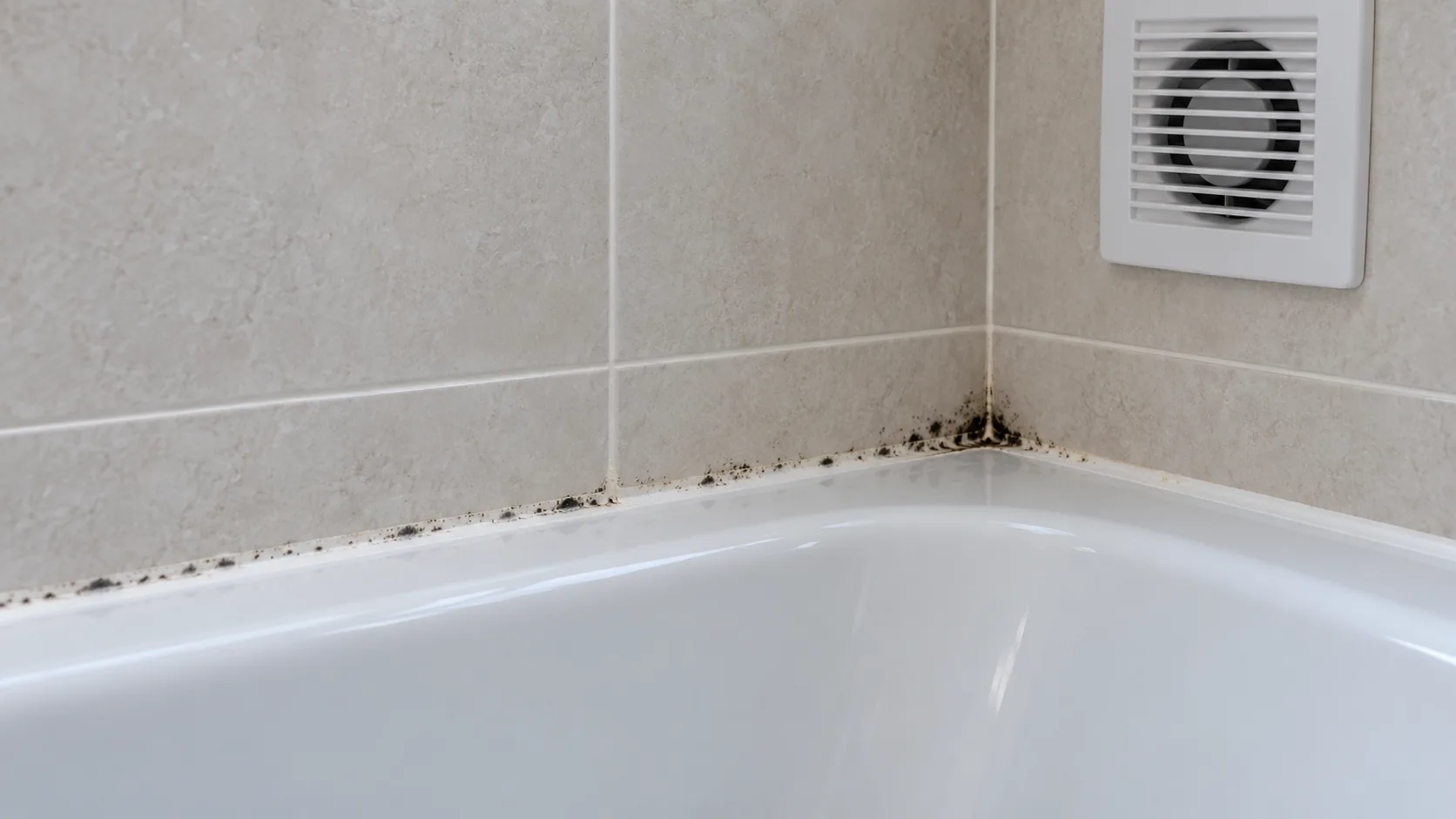
Silicone sealant around a bath or shower is one of the first places mould shows in a holiday let, and one of the hardest to clean. Once black spots have grown into the sealant itself, they often stay after cleaning. When that happens, have the old sealant cut out, let the area dry fully and reseal it, then make sure the fan clears the room after every shower. Replace shower curtains and bath mats that have mould on them, because they cost little next to a guest's photo in a review.
The guidance says absorbent materials such as carpets, soft furnishings and ceiling tiles may have to be thrown away if they go mouldy, because the mould can be difficult or impossible to remove completely. It also says damp or water-damaged materials that can't be cleaned or fully dried should be removed, and the area around them dried out. In a holiday let, that covers mattresses, cushions, curtains and rugs.
A mould smell with nothing on show can mean mould behind a surface: on the back of wallpaper or panelling, under a carpet, behind furniture or inside a ventilation unit. The guidance warns that lifting carpets or stripping wallpaper can release a lot of spores at once, so leave that to a professional. Add the seals, the grout and the backs of furniture to your holiday let deep clean list so they get a proper look between changeovers.
Reducing condensation during and between stays
The guidance lists several ways to address condensation: fixing building deficiencies, improving ventilation, improving energy efficiency and dealing with inadequate heating. It also stresses that kitchens and bathrooms, where a lot of moisture is produced, need adequate ventilation. In a holiday let, that turns into a few practical jobs:
- Repair or replace extractor fans that are broken, blocked or missing. If guests switch a fan off because it rattles, fix the rattle.
- Make ventilation easy to use. A line in the welcome guide showing where the fan switch and window vents are helps more than a paragraph of instructions.
- Think about where wet coats, towels and swimming kit end up drying. Drying laundry is one of the everyday moisture sources the guidance names.
- Keep the heating working and simple for guests to operate. Our guide to holiday let winter maintenance sets out heating checks for the colder months.
- Fix the outside problems your checks turn up, such as a blocked gutter or a failed window seal, rather than cleaning the inside again.
Check any fan instruction against the fan itself before it goes in the welcome guide. A line saying the fan comes on with the light is no help if it runs from a separate pull cord.
Extractor fans, cooker hoods and trickle vents
A fan that runs isn't necessarily a fan that works. Hold a single sheet of toilet paper against the grille while it runs, and it should be pulled flat against it. If it isn't, the fan, its ducting or the outside vent may be blocked or failing, and it needs looking at.
The guidance suggests two upgrades that suit a holiday let, because neither relies on guests remembering anything. A humidity-controlled fan switches itself on when the air gets damp. A fan wired to the light with an overrun keeps running for a set time after the light goes off. In the kitchen, the guidance says the extractor works best close to the hob, recommends a cooker hood as well, and says ventilation matters most where the cooker runs on gas.
Check the trickle vents at the top of the windows are clear and that guests can open and close them. The guidance says replacement windows must have them under building regulations. Installing ventilation and replacing windows count as controlled building work, so use a tradesperson registered with a competent person scheme or go through building control. The guidance also recommends having fans inspected and maintained by a qualified professional, who can advise how often.
Before the next booking
Before the next guests arrive, walk the property with the checks above, starting in the bathroom and kitchen and finishing outside. Run every extractor fan, photograph the cold spots and start a record, even if the first entry says nothing was found. Add the checks to your changeover notes so they happen every time. If any patch has already come back after cleaning, book an inspection by someone qualified rather than cleaning it again. After any repair, look at the same spot again at least six weeks later, the follow-up interval the guidance recommends.