
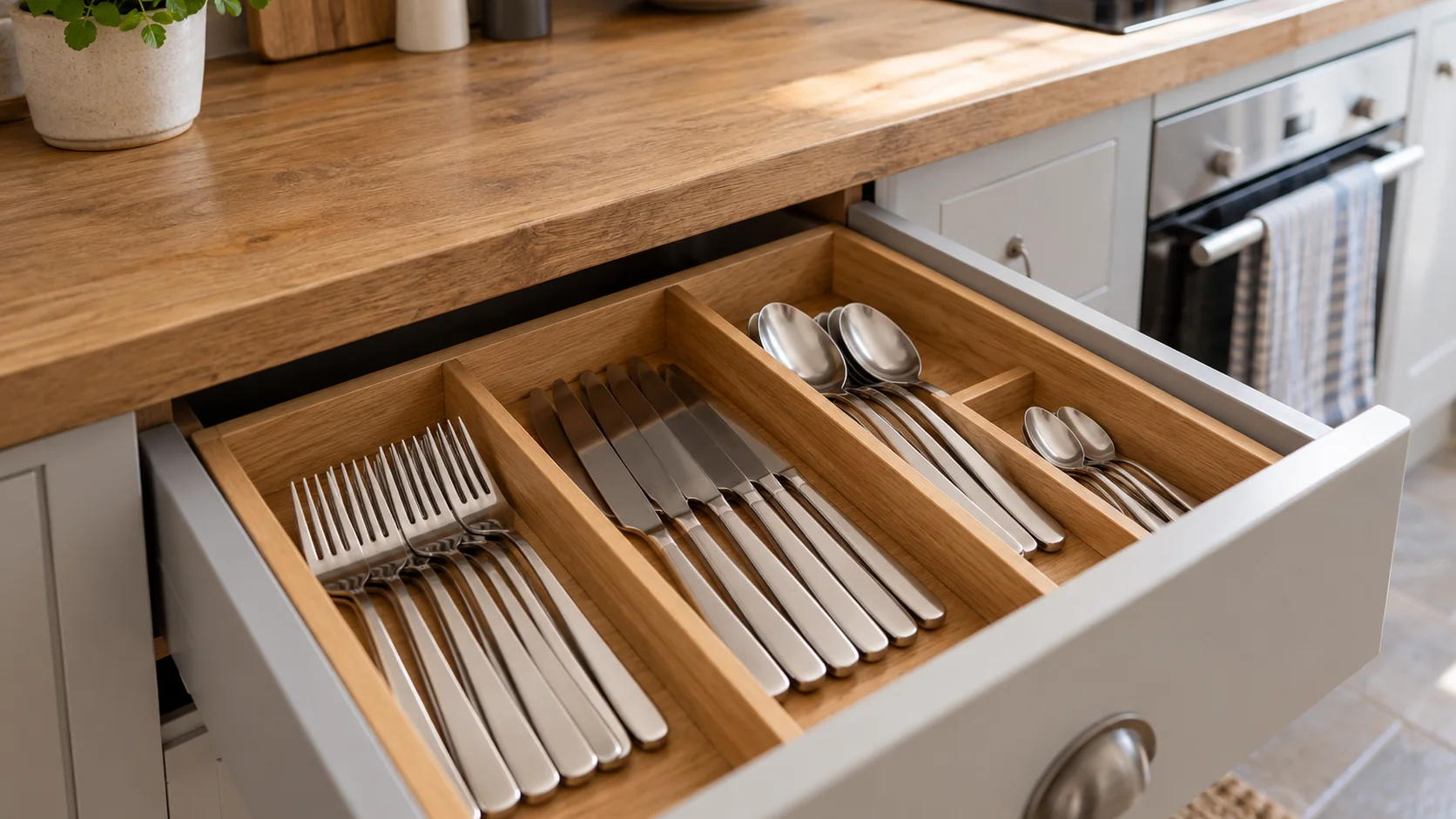
A holiday let inventory is only useful if someone checks against it. A list of what you bought tells you what you once owned; an inventory that whoever does the changeover checks tells you what was there when the last guests arrived, which is what you need when four wine glasses or a TV remote go missing. The main decision is what to count item by item and what to list as a group, and what follows works through that room by room, along with what to do when something is missing or broken.
What a holiday let inventory is for
An inventory does three jobs. It tells whoever does the changeover what should be in each room, so a gap is spotted while the property is empty rather than by the next guests. It gives you a dated record of what was there, and in what condition, when something goes missing or gets broken. And it gives you a list to reorder from, so a replacement matches what the rest of the set looks like.
It is a different document from your changeover checklist. The checklist lists jobs: strip the beds, clean the hob, empty the bins. The inventory lists contents. The two meet at changeover, when some inventory lines get checked, but keep the counts in the inventory and point to them from the checklist, so there is only ever one number for how many plates the kitchen holds.
Supplies that run down every stay are different again. Toilet rolls, washing-up liquid, dishwasher tablets and bin bags belong on a restocking list with a minimum level for each, not in the inventory, where a low bottle would sit next to a missing saucepan as if the two were the same kind of problem.
What to list in each room
Organise each room by where things are kept, such as "kitchen, cupboard left of the sink", so whoever checks knows exactly where to look. Use these as prompts:
- Kitchen: plates, bowls, mugs and glasses by type; cutlery by type; pans with their lids; baking trays and oven dishes; knives, chopping boards and utensils; storage tubs with their lids; the kettle, toaster, microwave and any appliance with removable parts
- Living room: a remote control for each device, games and puzzles, books, throws, cushions and lamps
- Bedrooms: pillows and duvets, hangers, bedside lamps, a hairdryer, and any spare bedding kept in the room
- Bathrooms: bath mats, the shower curtain, the bin, the toilet brush, and the hairdryer if one lives there
- Outside: garden furniture and its cushions, the parasol, the barbecue and its tools, and any bikes, locks or outdoor games
- Stored equipment: a travel cot, high chair, stair gate, fan or portable heater, and spare duvets, each with where it is kept
Leave out anything the property doesn't have, and add anything particular to it, such as a pizza oven, a set of beach windbreaks or a boot dryer.
Counting items or listing groups
Not everything needs a number. Count an item when the next guests would notice it was missing, when it is costly or slow to replace, or when it comes in parts that can go astray. A shelf of paperbacks can be one line. Teaspoons are worth counting, because a family who finds three teaspoons for six people will notice before you do.
| Item | List it as | Why |
|---|---|---|
| Dinner plates | A count, by type | A shortfall shows before the next guests set the table |
| Cutlery | A count for each type | Teaspoons and knives go missing separately from forks |
| Wine glasses | A count | Breakages are easy to miss in a full cupboard |
| Food processor or blender | The item and each of its parts | A missing lid or blade makes it unusable |
| TV remotes | Each one, with where it lives | Guests reach for it on the first evening |
| Books and games | One line per shelf | One missing paperback makes no difference to a stay |
| Garden cushions | A count, with where they are stored | They move between the garden and the shed |
Set each count from what is in the property on the day you first check it, not from what you remember buying. If the receipts say twelve tumblers and the cupboard holds ten, the cupboard is your starting point.
Details to record on each line
Each line in the inventory holds the same few details: the item, where it is kept, the count or the parts that make it complete, its condition, how often it is checked, and the date and name of whoever last checked it. Condition can be short: "good", "chip on rim of one", "handle loose". Its job is to stop existing wear being mistaken for new damage after the next stay.
The last-checked date is the detail that does the most work. When something turns out to be missing, the date tells you which stays fall between the last time it was seen and now, which is where to start looking and whom to ask. A tick with no date only tells you that someone once looked.
A finished line might read: "Wine glasses, kitchen cupboard above the kettle, count 8, one chipped and retired on the last check, checked at every changeover, last checked on the most recent changeover day." The wording is an example; what matters is that every line answers the same questions.
Keep a short history rather than overwriting the line each time. A spreadsheet with a row for each check, or a column of dates that grows to the right, is enough. If a count changes because you added or retired items, record the new count with its date, so an old check against the old count doesn't look like a shortage.
How to set up the inventory
Set it up one room at a time, starting with the kitchen. Choose a gap between bookings and work through the room in this order:
- Name each storage place: every cupboard, drawer and shelf.
- List what is in each place, using the room prompts above.
- Decide for each line whether it is a count, a single item with its parts, or a group.
- Count everything, and note anything already chipped, stained or worn.
- Photograph each storage place with counted items in it.
- Add the date, your name and how often each line will be checked.
A spreadsheet works well, especially a shared one that whoever does the changeover can update from a phone. Paper works too, as long as one copy is the master and paper checks are copied into it the same day. Whichever you choose, try it in the property before relying on it, because a cupboard under the stairs with no signal is a bad place to find out the form only works online.
Which items to check at every changeover
Counting the whole inventory at every changeover adds a lot of time, so split it into two groups. Check at every changeover the things guests use each stay and would miss straight away: glasses, mugs, cutlery, the kettle and toaster, and the TV remotes. Once whoever does the changeover knows the layout, comparing the glass cupboard and the cutlery drawer with their counts is quick. To see whether the counts still leave time before check-in, add them as a job in the holiday let changeover planner.
Check everything else on a longer cycle: monthly, at each deep clean, or between seasons for garden furniture and stored equipment. A deep clean is a natural time for the full count, because cupboards are being emptied anyway, so add the inventory check to your holiday let deep clean checklist. Write the check frequency on each line, so anyone doing a check can see what is due.
Adjust the split after the first few weeks. If a line is never short, it can move to the longer cycle. If something keeps going missing between full counts, move it onto the every-changeover list. On a same-day changeover with little time to spare, check the every-changeover lines first, and leave anything else due that day for the next visit, marked as not checked.
Stored equipment and spares
Equipment kept in a cupboard or outbuilding for guests who ask for it, such as a travel cot or high chair, is easy to forget until someone requests it and a part is missing. List each piece with its parts, such as the travel cot with its mattress and carry bag, check it when it comes back out of use, and check it again at the full count. When you check it, put it up and take it down again: a high chair tray that won't lock or a stair gate missing a fixing is better found in an empty property than by a family on the first evening.
Spares go on the inventory too, with where they are kept: extra mugs, a second set of wine glasses, a spare kettle. Then a replacement can come from the cupboard on changeover day, rather than from a shop after the next guests have arrived.
Photos that make checks quicker
A photo of each cupboard and drawer that holds counted items, taken when you set up the inventory, shows whoever does the changeover what it looks like when everything is there. A gap in a row of mugs or a pan without its lid is often quicker to spot against a photo than against a number on a list.
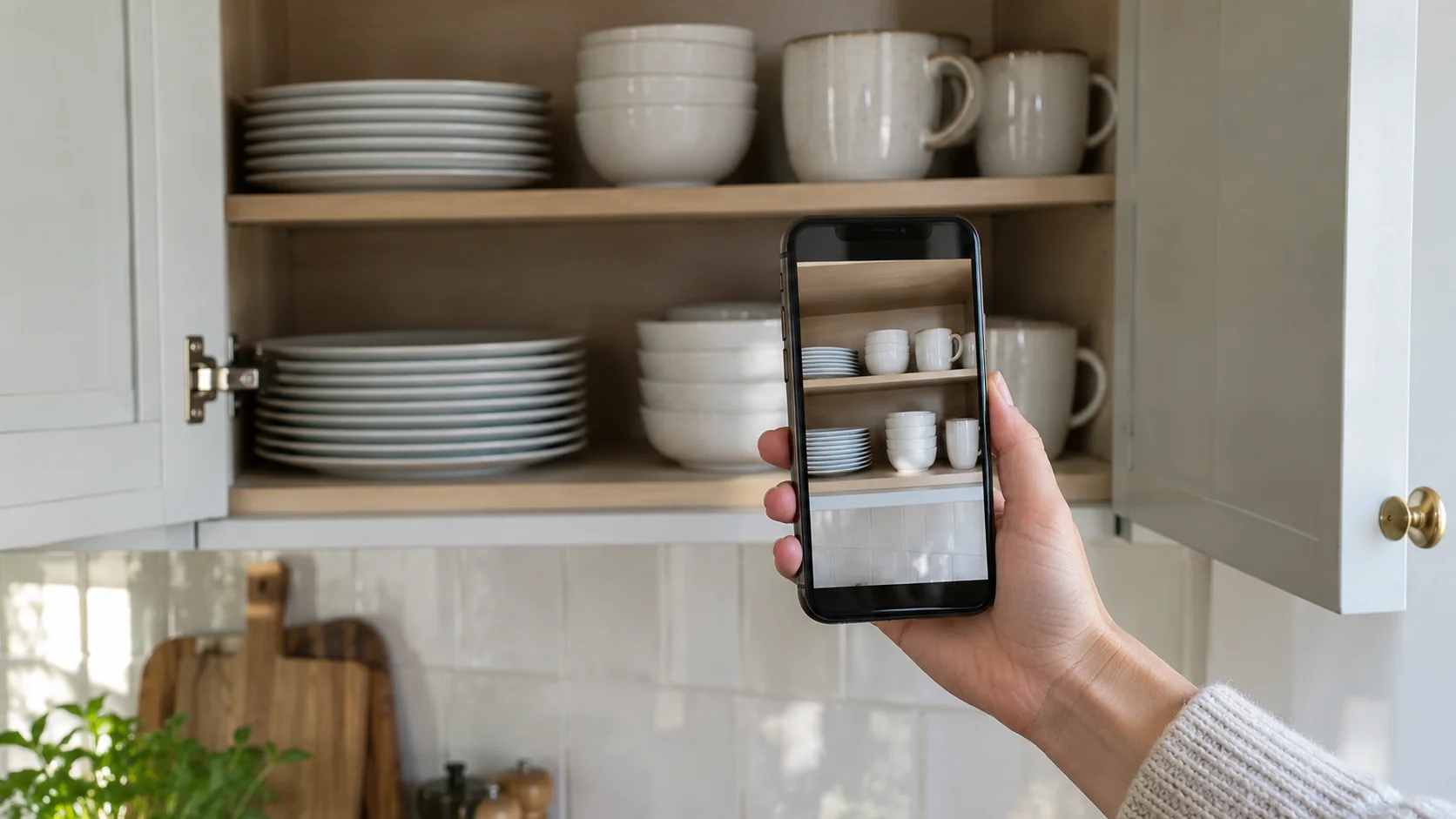
Keep the collection small: one current photo for each storage place, named the same way as its inventory line, and a new one only when the layout changes. Damage photos are separate. Take them when you find damage, date them, and keep them with the line for that item, so they are easy to find if you need to show what happened.
Cutting down losses and breakages
Some losses are guests packing a mug or a charger by mistake, and some are breakages that go unmentioned. A few habits reduce both. Keep counted items in fixed places, so a gap stands out and guests put things back where they found them. Keep phone chargers and adapters in the property's own colour or style, so they are less likely to end up in a guest's bag. Give remote controls a home, such as a small tray on the side table, and mention it in the welcome guide, so the remotes are where the next guests expect them.
Say in the welcome guide that you'd rather hear about a breakage than find it, and what guests should do with broken glass. Guests who know a broken glass won't cause a fuss are more likely to mention it, which means you replace it before the next arrival rather than after a complaint. Whether you charge for accidental breakages is your decision; put it in your house rules either way, so guests know before they arrive.
When something is missing or broken
Before treating an item as lost, search the places it could have moved to: the dishwasher, the drying rack, other rooms, the shed and any storage cupboard. Ask whoever has been in since the last check, including whoever does the changeover and any trades, whether they moved or used it. Recording a loss that turns out to be a misplaced item leaves the inventory wrong, so search first.
Then record what you found: the date, what is missing or damaged, where you looked, and a photo of any damage. Take anything broken that could cut someone, such as a chipped glass, out of use straight away, and note where it has gone.
Whether to raise it with the guest depends on the item. A missing teaspoon isn't worth a message; a broken television or a missing set of bike locks may be. Your dated check from before the stay is your best evidence that the item was there, so it matters as much as any photo.
Look for patterns as well as single losses. If the same kind of item keeps going, such as remotes, chargers or a particular style of mug, change something rather than replacing it each time: give it a fixed home, buy a style that is less tempting to pack, or keep a spare in the stored-equipment cupboard so a gap never reaches the next guests. If the booking came through Airbnb, hosts file a reimbursement request in the Resolution Center within 14 days of the guest's checkout. Handling a holiday let guest complaint without caving or escalating covers how to keep that conversation calm if the guest disagrees.
Replacing, adding and retiring items
Update the inventory the day anything changes. A replaced item keeps its line, with the date and any difference, such as a different model of kettle. A new item gets a new line and a first count. An item you get rid of is marked as retired with the date, rather than deleted, so the history still shows it was there.
Keep receipts or order confirmations with the line, or note where they are kept. When something needs replacing, the inventory then tells you what you bought and where from, so the new plates match the old ones and you aren't left with a cupboard of odd sets. When you first stock the property, or replace a whole set, choose plates, glasses and mugs from ranges that are likely to stay on sale, and buy a few extra at the same time for the spares cupboard. Matching replacements are then a shelf away rather than a search.
Where linen fits in the inventory
Linen and towels belong in the inventory as counts by place: on the beds, in the linen cupboard and away at the laundry. Note stains, tears and thinning fabric when you check, and retire worn items with a date, so the count shows what can still be used. Tea towels, oven gloves and bath mats fit the same pattern if they go through the same wash. How many sets each bed should have is a separate decision, covered in the guide to holiday let linen.
Sharing the inventory with your changeover help
If someone else does the changeover, they need the lines due at that visit, not the whole inventory. Point to it from the changeover checklist with a step such as "check the kitchen counts due today", rather than copying counts into the checklist, so there is only one number to keep up to date. Building a changeover checklist from scratch for a new holiday let covers how to set out those steps.
Agree what they do when a count is short: search nearby, note what they found and send you a photo the same day, and leave replacing the item and any conversation with guests to you. Ask them to mark anything they didn't have time to check as not checked, rather than ticking it, because a tick against a line no one looked at hides a gap until the next full count. Read through their notes once a week, so short counts and damage are dealt with before they build up.
The inventory and your insurance
If you claim on your contents insurance, an inventory with dated checks, photos and receipts shows what was in the property and the condition it was in. List higher-value items individually, such as the television, a coffee machine or bikes, with the make, model and serial number where there is one, and keep the receipt or a photo of it.
Check what your policy says about contents in a holiday let and about loss or damage caused by guests, because cover varies between policies. Insurance for self-managed holiday lets covers what a standard home policy may not.
Starting with the kitchen this week
Start with one room rather than the whole property. Pick the next gap between bookings, set up the kitchen inventory using the steps above, and ask whoever does the following changeover to check the every-changeover lines against it. After two or three changeovers you'll know which lines are worth counting each time and which aren't, and you can add the next room at the next gap.